
‘Mind-bogglingly crazy’: Europe’s deadly, early heatwave is smashing records
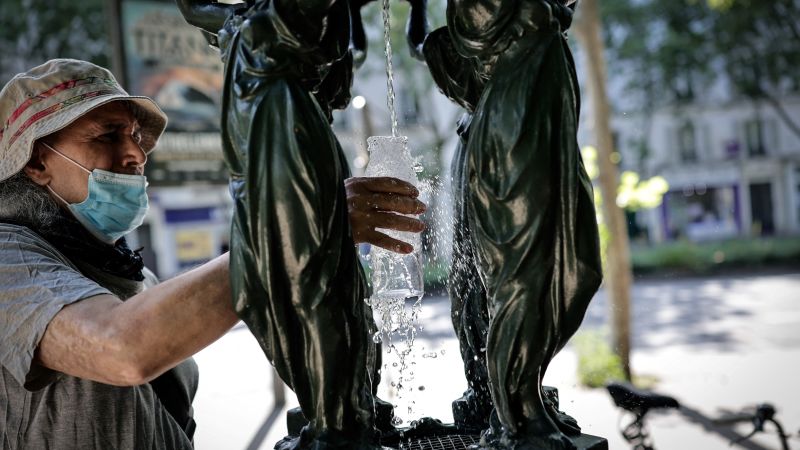
‘Mind-Bogglingly Crazy’: Europe’s Deadly, Early Heatwave is Smashing Records
Mind bogglingly crazy – Europe is experiencing an unprecedented heatwave that has pushed temperature records to their limits, with extreme warmth arriving earlier than usual this year. From the UK to the southern regions of France and Spain, the continent is enduring a climate anomaly that has sparked concern among scientists and officials. This phenomenon, driven by a persistent high-pressure system, is creating conditions that are both alarming and unusual, raising questions about the future of seasonal weather patterns.
Heat Dome Intensifies Unseasonal Heat
A heat dome, a high-pressure atmospheric pattern that acts as a barrier, has been trapping hot air over parts of Europe for days. This weather phenomenon, which is typically associated with summer, has now manifested in late spring, contributing to temperatures that are far beyond historical norms. Experts warn that such systems are becoming more frequent and severe due to human-induced climate change, which is altering the Earth’s natural balance. The heat dome’s prolonged presence has led to a cascade of environmental and societal impacts, from wildfires to water shortages.
As the heatwave escalated, emergency services in the UK were stretched thin. A wildfire erupted near Arthur’s Seat, a hill in Edinburgh, Scotland, while demand for water in southeast England surged, leaving hundreds of homes without access. The situation worsened overnight, as the UK faced a “tropical night” — a period where temperatures remained above 20°C (68°F) throughout the night. While this may seem mild, the combination of unrelenting heat and the lack of effective insulation in most homes has made these conditions dangerous, particularly for vulnerable populations.
UK Sets New May Temperature Milestones
The UK’s weather stations have recorded temperatures that defy expectations. On Monday, Kew Gardens in London hit 34.8°C (94.6°F), surpassing the previous record by 2°C (3.6°F). This was followed by another record on Tuesday, when temperatures climbed to 35°C (95°F). These spikes are not just notable for their magnitude but for their timing — May is typically a cooler month. The average high temperature for London in late May is around 20°C (68°F), making this year’s heatwave exceptionally rare.
“While we do occasionally have warm spells in May, what we’re seeing now is unprecedented,” said Stephen Dixon, a spokesperson for the Met Office. He highlighted that climate change is increasing the likelihood of such events, with what was once a 1-in-100-year occurrence now happening roughly every 33 years. The Climate Change Committee’s recent report echoed this sentiment, warning that the UK is “built for a climate that no longer exists.”
“What was around a 1-in-100 year event is now around a 1-in-33 year event,” Dixon added.
France’s Heatwave Claims Lives
France is also grappling with extreme conditions, as its weather service, Météo France, described the current temperatures as “unprecedented” for this time of year. Monday marked the country’s hottest May day on record, with heat-related incidents already leading to casualties. Maud Bregeon, a French government spokesperson, noted that “seven deaths directly or indirectly linked to the heat, including at least five from drowning, as well as deaths related to extreme heat during sports events,” have been reported. These incidents include a 53-year-old man who died during a running event in Paris and a woman who succumbed at a Hyrox sports event in Lyon, according to local media reports.
France’s Minister of Sports, Marina Ferrari, emphasized the urgency of the situation, stating that the deaths were “a stark reminder that practicing sports in extreme heat requires absolute vigilance.” The heatwave has not only impacted public health but also disrupted daily life, with officials urging residents to take precautions in the absence of widespread air conditioning.
Spain Faces Uncharacteristic Heat
Spain, too, is feeling the effects of the heatwave, with temperatures in the south projected to reach up to 40°C (104°F) by the latter half of the week. The country’s weather service, AEMET, has labeled these conditions as “extraordinarily high temperatures for the time of year.” While Spain’s infrastructure is better equipped to handle summer heat, the early arrival of such extremes is testing its resilience.
These extreme temperatures are part of a broader trend: European summers are becoming increasingly brutal, with heatwaves growing more intense and frequent. Scientists warn that this pattern is not accidental but a direct consequence of climate change. “We know beyond a shadow of a doubt that heat wave events such as this have been made more likely and more severe due to climate change,” said Peter Thorne, director of the ICARUS Climate Research Centre at Maynooth University. He also called the current records “mind-bogglingly crazy,” underscoring the severity of the situation.
“But nevertheless many of the records being set, particularly in the UK and France, are mind-bogglingly crazy,” Thorne added.
Climate Change Fuels Record-Breaking Heat
Climate change is a key driver behind the escalating heatwaves, with Europe emerging as the fastest-warming continent on the planet. The accumulation of greenhouse gases from fossil fuel combustion has created a warming effect, enveloping the Earth like a blanket. This has led to more frequent and intense weather events, including heatwaves that are pushing boundaries previously thought unattainable.
The consequences of these changes are already evident. In 2024, Europe experienced its hottest year on record, resulting in over 62,000 heat-related deaths. The current heatwave is a preview of what may come, with scientists predicting even more severe conditions in the coming years. The emerging El Niño phenomenon, which can amplify global temperatures, is expected to further intensify the situation in 2026 and 2027.
While the exact link between specific deaths and the heatwave is still under investigation, the pattern of early and extreme temperatures is undeniable. This year is poised to be among the hottest on record, but experts caution that it may still be one of the cooler years we will encounter in our lifetimes. The implications are clear: without significant action to curb emissions, Europe’s climate will continue to challenge its residents and infrastructure.
