
Cave diving is fraught with danger, but the reward is sights like nothing else on Earth
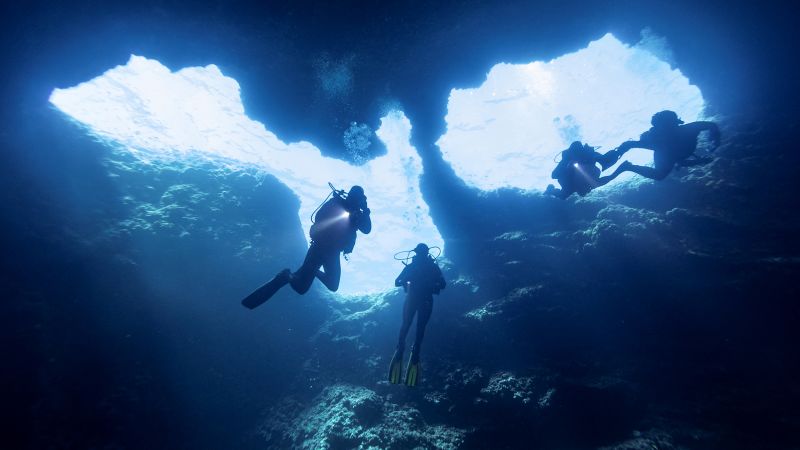
Cave diving in the Maldives: A perilous journey into Earth’s hidden depths
Cave diving is fraught with danger – Cave diving, a discipline that blends adventure with risk, has captivated thrill-seekers for decades. Yet, the recent tragedy in the Maldives has once again highlighted the precarious nature of exploring these subterranean wonders. Five Italian divers lost their lives on May 14, 2026, while navigating the Vaavu Atoll caves, and Maldivian military diver Sgt. Mohamed Mahudhee also perished in the effort to retrieve their bodies. The incident has left the diving community reeling, but for many cave divers, the pull of these mysterious underwater tunnels remains irresistible.
Alien worlds beneath the waves
Imagine descending into a realm where sunlight is replaced by the soft glow of a flashlight. The caverns, stretching for miles, create a dark, labyrinthine expanse teeming with life unseen by surface dwellers. These environments, often referred to as “veins of Mother Earth,” host creatures that thrive in perpetual shadow, their bioluminescent forms illuminated only by the diver’s beam. For those who venture inside, the experience is akin to stepping into another dimension—a place where the rules of the surface world dissolve.
“It’s like swimming through the veins of Mother Earth,” said veteran Canadian cave diver Jill Heinerth, reflecting on her own explorations. “You’re literally within the sustenance of the planet that’s supplying water for humanity, wildlife, and even our modern industries.”
The Maldives’ underwater caves are a rarity, with their intricate formations and depths that challenge even the most seasoned divers. Vladimir Tochilov, a technical diving instructor familiar with the region, noted that these systems are unique in their scale and complexity. While the exact cause of the May 14 incident is still under investigation, the fact that the divers exceeded the standard recreational limit of 30 meters (98 feet) raises questions about the boundaries of their exploration.
A journey into the unknown
The 2024 documentary “Diving Into the Darkness” captures the essence of this perilous pursuit. Heinerth, who has logged over 8,000 dives, shared a haunting memory of swimming through the “graves of my friends,” a metaphor for the countless divers who have succumbed to the challenges of these depths. Her words echo a broader sentiment among cave divers: the allure of discovery often outweighs the risks of the unknown.
Even in the face of danger, the rewards are unparalleled. These caves offer glimpses into an ecosystem that operates independently of the surface, with towering stalactites and stalagmites forming natural arches and corridors. Biologists and ecologists describe the environment as a living laboratory, where marine life adapts to extreme conditions. For divers like Heinerth, the experience is transformative, akin to the “overview effect” astronauts feel when viewing Earth from space. “I’m having a similar effect from being inside the planet,” she explained, emphasizing the profound connection between the diver and the ocean’s life-support systems.
The cost of exploration
Cave diving demands unwavering preparation and mental fortitude. Divers must navigate tight spaces, often contorting their bodies to squeeze through narrow passages. Heinerth described one such moment: “My shoulders are scraping the ceiling and my belly is on the floor, with sand and silt blasting me in the face.” In such conditions, visibility can be reduced to less than a meter, and every movement requires precision.
Before each dive, Heinerth engages in a rigorous self-assessment. She visualizes potential failures—equipment malfunctions, guideline breaks, or sudden loss of oxygen—and mentally rehearses responses. “Am I ready for self-rescue today with the gear I have?” she asked. “And am I capable of saving my buddy if something goes wrong?” These questions underscore the discipline’s emphasis on both technical skill and psychological readiness.
Despite the risks, cave divers remain drawn to the mystery of these underwater landscapes. The caves are not just physical spaces but symbolic gateways to the planet’s hidden secrets. For Heinerth, the thrill lies in the moment of discovery: “You’re not just seeing a place, you’re becoming part of it.” This connection, however, comes with a price. The loss of five divers in the Maldives has reminded the community of the fragility of human life in such extreme environments.
Investigating the depths
While the cause of the May 14 incident remains unclear, authorities are working to determine whether the divers exceeded their planned depth or if equipment failures played a role. The five Italians, along with Mahudhee, had been granted permission to explore beyond the usual recreational limits, suggesting their mission was both ambitious and well-prepared. Yet, even with expertise, the caves can turn deadly in an instant.
Heinerth’s insights into the dangers of cave diving are as vivid as the environments she describes. “You cannot just ascend to the surface like in other dives,” she warned. “There’s no margin for error. You’re reliant on your own wits and your buddy’s.” This reliance on teamwork and composure is critical in a setting where a single miscalculation can lead to catastrophe. The recent tragedy has also sparked discussions about safety protocols and the need for deeper understanding of these ecosystems.
As the investigation unfolds, the Maldives’ caves continue to draw adventurers. For those who choose this path, the promise of discovery is a powerful incentive. Yet, the incident serves as a stark reminder of the discipline’s risks. Cave diving is not for the faint-hearted—it is a journey into the unknown where every breath is a gamble, and every turn of the guideline could mean life or death.
Heinerth’s words, however, encapsulate the enduring appeal of the activity. “Even in darkness, there’s a beauty that transcends the surface world,” she said. “It’s a place where humans feel small, yet connected to the very foundation of life.” This duality—danger and wonder—defines cave diving, a sport that rewards courage with the privilege of witnessing Earth’s most hidden marvels.
With their unique challenges and breathtaking rewards, underwater caves remain a testament to human curiosity. They are a reminder that exploration, while perilous, is what drives us to push boundaries and uncover the mysteries of our planet. As the Maldivian incident underscores, the journey into these depths is not without cost—but for many, it is a cost worth paying.
