
Barney Frank, liberal icon who regulated a ‘too big’ financial industry, dies at 86
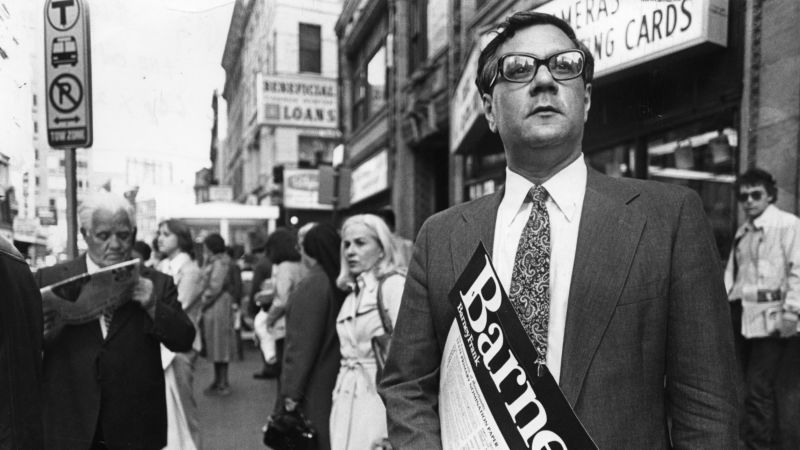
Barney Frank, Liberal Icon Who Regulated Financial Industry, Dies at 86
A Legacy of Reform
Barney Frank liberal icon who regulated – Barney Frank, the liberal icon who regulated the financial industry and championed progressive policies, has died at 86. His sister, Doris Breay, shared the news with CNN, reflecting on his enduring presence in her life: “He was a wonderful brother. I was lucky to be his sister. I will miss him.” Frank’s efforts to reshape financial oversight, especially in the wake of the 2008 economic crisis, left a lasting impact on modern economic policy.
Frank’s career was defined by his relentless advocacy for systemic change. As a key figure in the post-2008 era, he played a critical role in crafting reforms to curb the unchecked power of major financial institutions. Elected to the House Financial Services Committee in 2007, he led legislative efforts to address the subprime mortgage crisis. “We are putting the money there … saying we know that we’re taking steps so that they’re not going to face this problem in the future,” he told CNN in July 2008, underscoring the necessity of proactive measures to prevent economic collapse.
“The more people know about you, the more they can relate to your perspective,” Frank once said, emphasizing the importance of visibility in political discourse.
Trailblazer in the LGBTQ Movement
Frank’s influence reached beyond finance. In 1987, he became the first openly gay member of Congress, a groundbreaking act during the AIDS epidemic. Many feared his sexuality would jeopardize his career, but Frank remained steadfast. “I am a much better openly gay man than I was a closeted one,” he remarked in a 2017 Men’s Journal interview, highlighting the personal and political evolution he embraced.
His commitment to LGBTQ rights extended to landmark legislation. Frank was instrumental in the repeal of the “Don’t Ask, Don’t Tell” policy, which barred openly gay service members from serving in the military. In 2012, he made history by becoming the first sitting Congress member to marry a same-sex partner while in office. These actions solidified his reputation as a fearless leader in advancing equality, even as his career faced opposition from conservative and progressive factions.
A Personal and Professional Journey
Frank’s political career was marked by intellectual rigor and candid critiques. Even after retiring, he remained a vocal figure in public life, often appearing on television and delivering sharp analyses of contemporary politics. In a recent CNN interview, he criticized the Democratic Party for its approach to social issues, arguing that progressive agendas sometimes prioritized ideological purity over practical solutions. His ability to connect with diverse audiences was a hallmark of his career.
Frank’s work in financial regulation was equally transformative. As chairman of the House Financial Services Committee, he spearheaded the push for the Dodd-Frank Wall Street Reform and Consumer Protection Act. Signed into law by President Barack Obama in 2010, this legislation established stricter oversight for banks, including liquidity requirements, stress tests, and the Volcker Rule. It also created the Consumer Financial Protection Bureau (CFPB) to safeguard consumers from predatory practices. These measures remain central to the liberal icon who regulated the financial industry’s vision for economic stability.
The Impact of Dodd-Frank
The Dodd-Frank Act, named after its chief architect, aimed to address the risks posed by “too big to fail” institutions. Frank’s leadership ensured the law would serve as a blueprint for financial regulation for years to come. While the legislation faced ongoing criticism, particularly from Republicans seeking to roll back its provisions, the CFPB and other elements of the act continued to shape the landscape of consumer protection and banking oversight.
Frank’s legacy as a liberal icon who regulated the financial industry endures in the frameworks he helped establish. His work not only reshaped regulatory policies but also inspired future generations of lawmakers to prioritize accountability and transparency. As the financial sector evolved, his contributions remained a touchstone for discussions on economic reform and social equity.
