Spain’s huge pork industry seeks salvation from swine fever threat

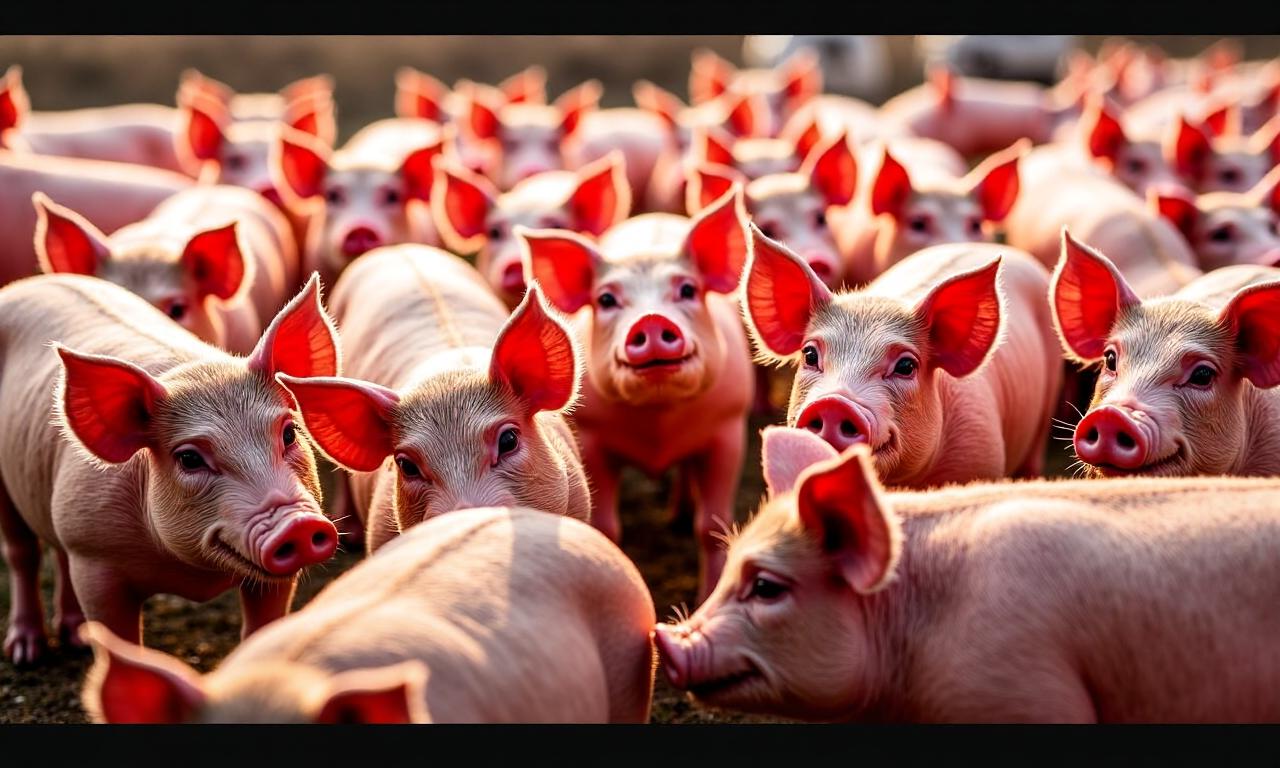
Spain’s Pork Industry Battles Swine Fever Crisis
Jordi Saltiveri, a farmer managing a 8,000-pig operation, recalls the moment news broke late last year about the presence of African Swine Fever (ASF) in Spain. “I felt sadness, frustration, and helplessness,” he says. The revelation that a nation is infected with ASF often triggers a halt in pork imports from other countries, and this has impacted his business significantly.
His farm, inherited from his father and grandfather, lies in a remote area of Lleida, Catalonia. A worn Catalan independence flag flutters at its entrance, while the distant sounds of pigs on the premises echo through the air. Although the ASF outbreak remains localized, Saltiveri, who leads the regional farming cooperatives federation, and countless other Spanish pork producers, are grappling with its consequences. “Each pig sold for slaughter has lost around €30 to €40 in value since the outbreak,” he explains. “I’m anxious about the heavy losses we’re facing.”
The virus’s origin is linked to Collserola Park, a nature reserve near Barcelona. In late November, the remains of an infected wild boar were discovered there, prompting swift action from authorities. The park was closed, and access restricted as officials searched for additional cases. While the initial investigation ruled out a leak from a nearby animal research facility, the abundance of wild boar in the region, some of which venture into Barcelona’s outskirts, has been pinpointed as a key driver of the spread.
Òscar Ordeig, Catalonia’s agriculture minister, highlights the issue of overpopulation among wild animals. “Allowing too much freedom to these creatures has led to a surge in rabbits, deer, and boar numbers,” he tells the BBC. “This has resulted in increased traffic accidents and disease transmission.” The region’s boar population is estimated to range between 120,000 and 180,000. To curb the spread, the government has targeted a 6km radius around the first cases as high risk, with a 20km area designated for lower risk. Culling operations employ net traps, metal boxes, and quiet firearms, while cameras and drones track the animals’ movements and test their carcasses for ASF. By March, 232 boars had confirmed positive results.
Authorities have also installed fences to limit boar movement, with officers disinfecting their gear after patrols. Ordeig emphasizes the importance of strict biosecurity measures, which have been a cornerstone of Spain’s agricultural strategy. “We must utilize every available resource to protect our industry, economy, and farming community,” he says. “This situation has significant implications.”
Spain’s pork sector, now valued at €25bn, has grown substantially since eradicating ASF three decades ago. But once ASF is detected, export markets typically close. Brazil, Japan, Mexico, South Africa, and the U.S. have suspended Spanish pork imports, while EU members, China, and the UK have imposed restrictions only on products from the affected north-eastern region. The drop in demand has not only reduced exports but also depressed prices, directly affecting farmers like Saltiveri. In January, Catalonia’s pork exports fell 17% compared to the prior year. According to Unión de Uniones, a farmers’ group, the industry has already lost over €600m since the crisis began. Until the disease is fully eradicated, Spain must wait a year to be officially declared “clean” and restore its export status.