Beijing promised to ‘fight back’ over Taiwan leader’s US visit. But this time it has more to lose

Beijing promised to ‘fight back’ over Taiwan leader’s US visit. But this time it has more to lose
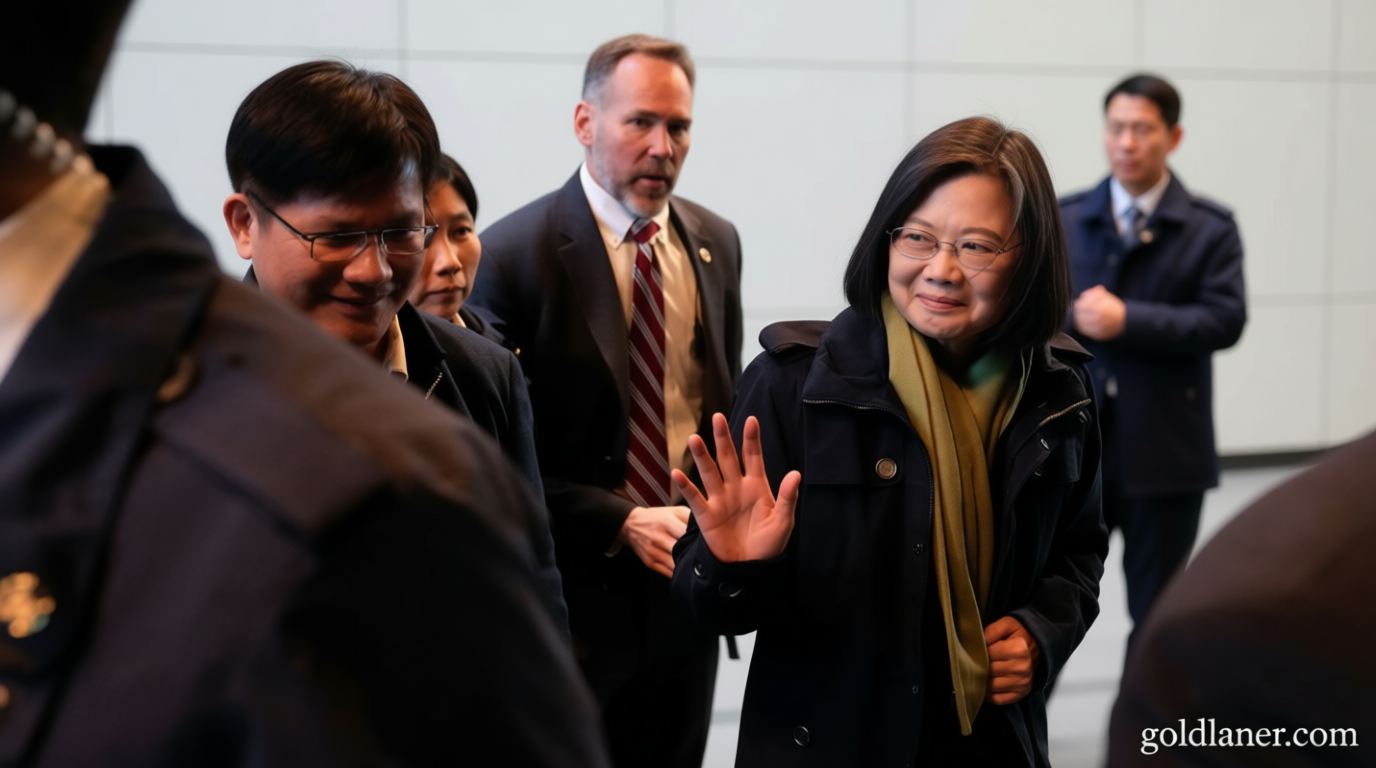
The upcoming meeting between Taiwan’s President Tsai Ing-wen and US House Speaker Kevin McCarthy in California has raised alarms about a potential resurgence of China’s assertive strategy, reminiscent of last year’s response to then-Speaker Nancy Pelosi’s visit to Taipei. During that period, Beijing conducted extensive military operations, including missile launches into the island’s surrounding waters and the deployment of warplanes across the Taiwan Strait’s critical median line. Simultaneously, it severed diplomatic and economic ties with the US, targeting areas like military collaboration and climate initiatives, in protest of what it perceived as a breach of its territorial claims.
Now, Beijing has again issued warnings, threatening to “resolutely fight back” should the Tsai-McCarthy encounter proceed. The US, however, has allowed Tsai to stop in Washington during her Central America itinerary, prompting Chinese leaders to caution about the risk of escalating tensions. Analysts suggest that this meeting, held on American soil rather than in Taipei, may encourage Beijing to adopt a more measured approach, particularly as it coincides with Taiwan’s presidential election—a pivotal moment that could reshape the island’s diplomatic trajectory.
“This puts the burden on China not to overreact, because any overreaction is only going to push China further away from the world,” said Yun Sun, director of the China Program at the Stimson Center think tank. The opaque nature of China’s governance, combined with internal bureaucratic rivalries, complicates predictions of its response. While the government has historically responded with military force to Taiwan’s actions, it now faces the challenge of balancing retribution with broader geopolitical stability.
As the meeting was announced earlier this week, tensions between the US and China remain high, fueled by disputes over a Chinese surveillance balloon incident and semiconductor trade dynamics. The potential fallout from a Beijing backlash could be more severe than last year’s, given the heightened stakes in their relationship. Taiwan continues to recover from the August 2022 military incursions, which eroded the previously informal border between Beijing and Taipei in the strait.
Taiwan’s Central News Agency confirmed Tsai’s planned encounter with McCarthy, highlighting the significance of the event. The meeting, involving the leader of the US House’s Republican majority, marks a symbolic step in deepening ties between the island and the United States, despite their unofficial status. For Tsai, entering her final year in office, the event is seen as a defining moment, according to Wen-Ti Sung, a political scientist at the Australian National University’s Taiwan Studies Program.
“She has this image as the Taiwanese president who has taken US-Taiwan relations to new heights, and who … has been able to give Taiwan almost unprecedented international visibility,” Sung noted. Over the past decade, China has significantly bolstered its military capabilities under President Xi Jinping, intensifying its economic, diplomatic, and military influence. Yet, the island’s growing global presence has forced Beijing to reconsider its approach, even as it maintains its claim over Taiwan.