
Some DHS contractors told White House officials they were asked to pay Corey Lewandowski
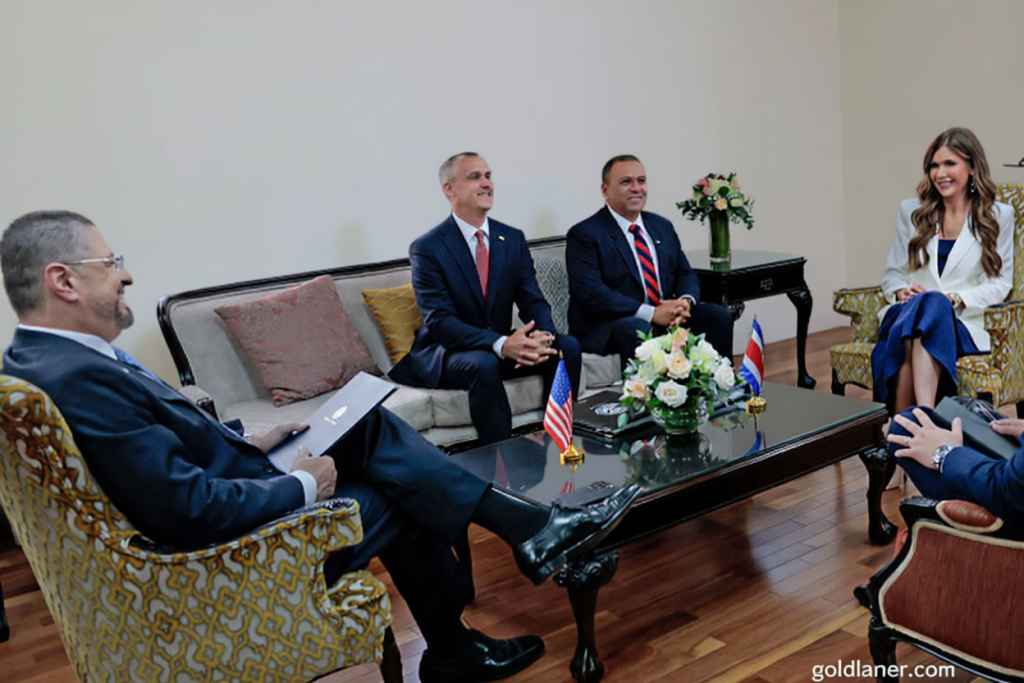
Some DHS Contractors Claimed White House Officials Requested Payments from Corey Lewandowski
Over a year prior, George Zoley, founder of The GEO Group, requested a meeting with Corey Lewandowski, a key Trump ally who had recently joined as a top adviser to Homeland Security Secretary Kristi Noem. At the time, GEO Group, a major player in the private detention sector, had significant financial stakes in Trump’s deportation policy, which aimed to funnel billions into federal operations for immigration enforcement. The company’s existing federal contracts in those areas already totaled more than $1 billion annually.
History of Disagreement During Transition
Their prior disagreements surfaced during the period between Trump’s November 2024 election and his January 2025 inauguration, before Lewandowski formally entered government service, as reported by two industry insiders and a senior DHS official. According to a senior DHS official and three individuals who knew of their conversation, Lewandowski conveyed during this phase that he expected compensation for safeguarding and expanding GEO Group’s contracts.
Zoley, troubled by the appropriateness of the request, informed Lewandowski he would not participate in such an arrangement, as noted by the sources. Describing the confrontation as tense, they explained that Zoley was concerned about the propriety of the arrangement.
Lewandowski’s Role in Contract Decisions
After the administration took office, Lewandowski became an unpaid “special government employee” at DHS, serving as a de facto chief of staff to Noem and reportedly impacting contract allocations. Zoley worked to ease the tension from their initial discussion by arranging a follow-up meeting with Lewandowski in late February or early March 2025. However, this second encounter did not improve the situation.
In that meeting, Zoley proposed placing Lewandowski on a retainer—regular consulting fees—with GEO Group, according to two industry sources. Lewandowski, however, insisted on being paid according to the company’s new or extended contracts with DHS. “He wanted payments — what some people would call a success fee,” said a person with knowledge of the meeting. Zoley refused the offer, the sources stated.
Contract Changes and Denials
Subsequently, the duration of two of GEO Group’s federal contracts decreased, and several of its facilities, designed to house migrants, remained underutilized despite increased funding from Congress and Trump’s administration for the deportation initiative. GEO Group officials suggested that these changes were linked to their refusal to meet Lewandowski’s demands, as per a source familiar with their internal discussions.
A senior DHS official stated that within weeks of Lewandowski’s second meeting with Zoley, he advised against awarding further contracts to GEO Group. Lewandowski’s spokesperson refuted this claim, asserting, “This is absolutely false and did not happen — Mr. Lewandowski never demanded any payment or compensation from the Geo Group, at any time.”
Asked if he had ever received “any money from any of the contracts” he had approved, Lewandowski previously stated, “zero, not one penny.”
Investigation and Trump’s Actions
Currently, lawmakers are scrutinizing Lewandowski’s involvement. Noem was dismissed by Trump following the hearings, with the president stating she would leave her post by March 31. Lewandowski has yet to decide whether he will depart with her. On Wednesday, Trump’s appointee to replace Noem, Sen. Markwayne Mullin, R-Okla., faced questions in a congressional hearing regarding cooperation with a Democratic-led investigation into three businesses that secured a $220 million advertising contract featuring Noem.
