
Iran threatens Gulf energy facilities after Israeli attack on its largest gasfield
Iran threatens Gulf energy facilities after Israeli attack on its largest gasfield
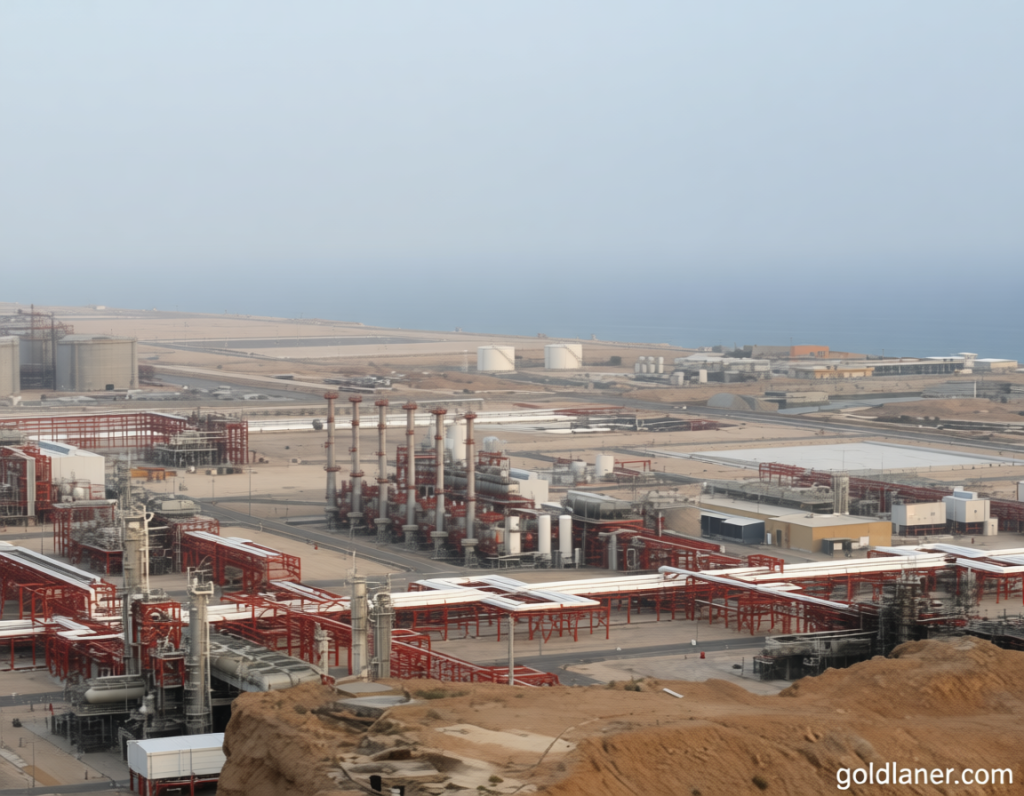
Following Israeli strikes on its most significant gas reserve, Iran has vowed retaliatory actions against energy infrastructure in the Gulf region. This marks the first direct assault on the country’s fossil fuel production since the conflict began. The Revolutionary Guards of Iran announced that they would launch strikes on key facilities in Saudi Arabia, the UAE, and Qatar “within the next few hours,” as per reports from state media. These facilities, including the South Pars gasfield shared with Qatar, were hit by missiles, triggering concerns about potential disruptions to global energy supplies.
The attack on the South Pars field, which serves as Iran’s primary gas reserve, was attributed to Israeli forces with US backing, according to Israeli media. This escalation has shifted the focus of US-Israeli operations toward Iran’s energy sector, a move that could heighten tensions in the region. Despite this, oil prices have remained stable, as the two nations previously avoided targeting Iran’s oil and gas infrastructure to prevent a sharp rise in global energy costs.
Iran’s state media listed several facilities under threat, including Saudi Arabia’s Samref refinery and Jubail petrochemical complex, the UAE’s al-Hosn gasfield, and Qatar’s Mesaieed petrochemical complex and Ras Laffan refinery. A warning issued by the regime urged all individuals in these areas to evacuate immediately. “These centres have become direct and legitimate targets and will be targeted in the coming hours,” the statement declared. “Therefore, all citizens, residents, and employees are requested to immediately leave these areas and move to a safe distance without any delay.”
“These centres have become direct and legitimate targets and will be targeted in the coming hours. Therefore, all citizens, residents, and employees are requested to immediately leave these areas and move to a safe distance without any delay.”
Eskandar Pasalar, governor of Asaluyeh in southern Iran, criticized the US-Israeli alliance, calling the escalation “political suicide.” He argued that the war’s focus had shifted to a “full-scale economic war.” Meanwhile, a Qatari government representative highlighted the broader implications, stating that attacks on energy infrastructure “constitutes a threat to global energy security, as well as to the peoples of the region and its environment.”
Market responses reflected the rising anxiety: the international oil benchmark surged by 5% to $108.60 per barrel, while Europe’s gas price rose over 7.5% to €55.50 per megawatt hour. This came after the third week of war saw Iranian strikes on the UAE’s Shah natural gasfield, along with attacks on Iraq’s Majnoon oilfield and Fujairah, the UAE’s largest port and oil storage hub. These strikes have already reduced regional oil exports by 60% compared to prewar levels, forcing Gulf neighbors to limit production due to capacity constraints.
Despite the attacks, Iran has managed to keep its oil export operations intact, sending crude through the Strait of Hormuz without interruption. The US, meanwhile, targeted Kharg Island, a critical hub for oil processing, focusing on military assets rather than export facilities. However, the threat of Iran setting fire to vessels carrying crude from its Gulf counterparts has added to the uncertainty in global markets. The oil price briefly exceeded $116 per barrel earlier in the week, signaling the growing economic impact of the war on energy supplies.
