
They were forced to hand one son over to the Israeli army in return for another. Eight months later he was dead in prison
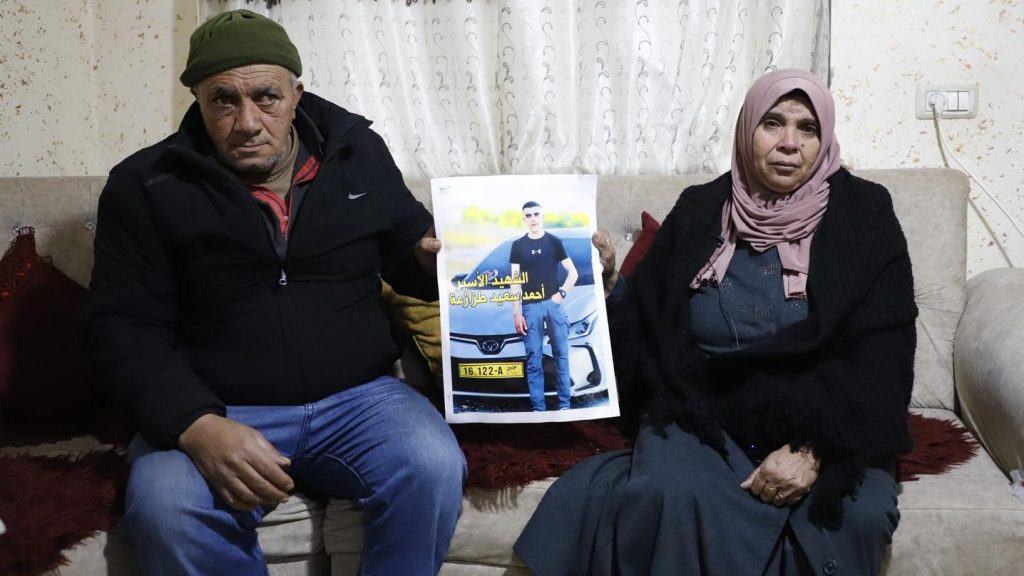
Forced to Trade One Son for Another, Family Grieves as Prisoner Dies After Eight Months
The Tazaza family in Qabatiya, a northern West Bank town, now faces unbearable sorrow after Ahmad Tazaza, their youngest son, died in Israel’s Megiddo prison on 3 August 2025. His parents say they were compelled to surrender him in January 2025 in exchange for his older brother, a decision they later came to regret.
A Healthier Brother, A Deeper Guilt
Ahmad, a 20-year-old with no prior medical issues, was handed over to Israeli authorities in the occupied West Bank. His parents remain puzzled about why he was targeted, yet the situation mirrored the experiences of countless Palestinian youths. They were subjected to repeated raids, threats, and intimidation by Israeli security forces, who eventually captured him after a prolonged search.
“They ransacked the house, leaving nothing intact,” said Najah Abdul Qader, Ahmad’s mother, in a
blockquote> from the Middle East Eye. “He wasn’t at home that night—he was working at the market. They took his brother and father, then released them, saying, ‘We want him.’”
Qader recounted how an Israeli soldier had warned her that the house would be bombed if Ahmad didn’t surrender. He had already narrowly avoided capture once, leaping from a vehicle as it was crushed by a bulldozer. The family’s resolve was tested again when the forces detained his brother a second time.
A Pact for Survival, A Cost in Blood
“They said: ‘We won’t let him go until you bring your other son,’” recalled Saeed Tazaza, Ahmad’s father. “His brother is married with two children. So we told Ahmad to come with us. We caught him and handed him over.”
Accompanied by their second son, Ahmad’s parents delivered him to the Salem checkpoint near Jenin. “He looked at us, and I knew he would not return,” Qader said in a
blockquote>. “He turned his face and walked away. I felt he was going to die.”
At the time, the family believed they had spared him from a more dangerous fate. “We handed him over because we were afraid,” his father explained. “Afraid he would die. We were forced, and that’s our fate.”
Medical Mysteries in a Confined Life
Ahmad’s death in Megiddo prison has sparked questions. A post-mortem report, dated 8 August 2025, was reviewed by the Middle East Eye and noted he was described as “healthy” during detention. However, his records showed he had suffered from diarrhoea and scabies, and a sore throat was reported days before his death.
On 2 August, an on-call physician observed blood stains on his trousers. During a clinic visit, Ahmad asked to use the restroom and then collapsed, losing consciousness and vital signs. Resuscitation efforts, including intubation and CPR, failed to save him.
A Disputed Account, A Silent Prison
The report also suggested possible signs of a severe blood cancer, such as acute leukaemia or aggressive lymphoma, ruling out sudden death causes. Yet, the family disputes this explanation, as they had no opportunity to see Ahmad or speak with him during his eight-month imprisonment.
They relied on accounts from other prisoners after their release to learn of his condition. An International Committee of the Red Cross liaison officer informed them of his death, though the ICRChas not been able to access Palestinian detainees in recent months. Without his body, the family’s grief is compounded by uncertainty, their hands seemingly stained with the ink of their son’s fate.
