
A free Iran is their shared dream. But the diaspora remains torn on the best path forward.
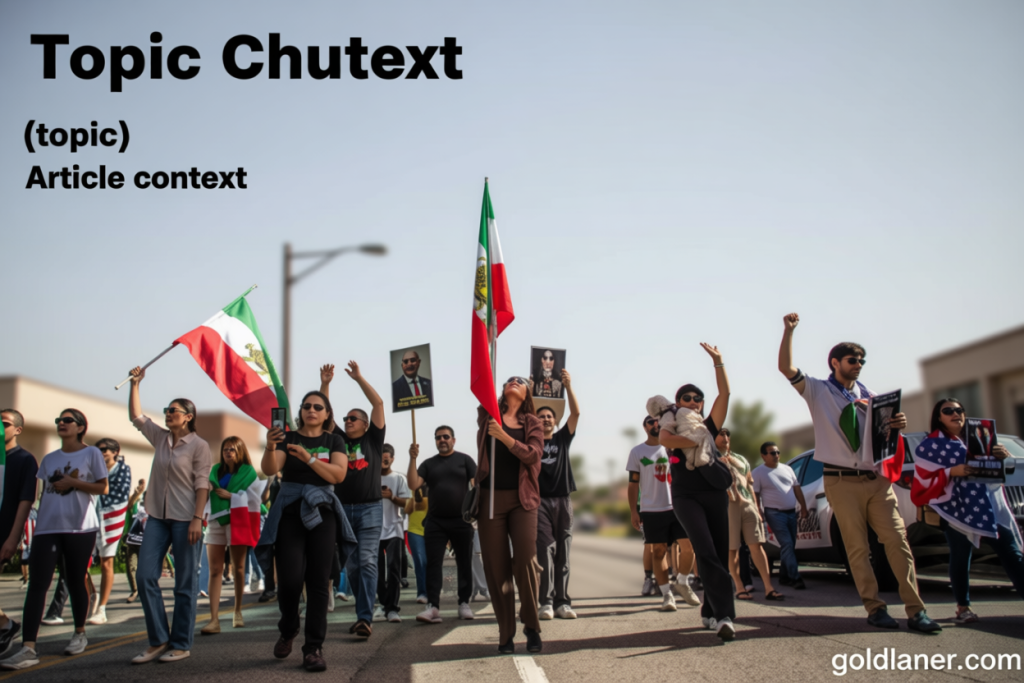
A Free Iran is Their Shared Dream. But the Diaspora Remains Torn on the Best Path Forward
Los Angeles witnessed contrasting scenes of public sentiment last weekend. In one corner, a gathering near City Hall saw hundreds of Iranian Americans rallying against the initiation of an unapproved military campaign. Their voices echoed with calls like “Stop the war in Iran” and “We the people don’t want war.” In another part of the city, on the Westside within the “Tehrangeles” community, a similar group of diaspora members celebrated what they saw as a pivotal moment for toppling the regime in their homeland. They waved flags representing America, Israel, and Iran, danced to vibrant music, and rejoiced at the news of Ayatollah Ali Khamenei’s demise in U.S.-Israeli strikes.
The emotional duality observed among Iranian Americans underscores the growing rift within the community as violence intensifies in the Middle East. This division is particularly pronounced among those whose families escaped the theocratic regime established after the 1979 Islamic Revolution. “Some people are so aggrieved at this regime that they say, ‘At any cost, come and destroy this regime even if it means destroying parts of the country,’” explained Abbas Milani, director of Iranian studies at Stanford University. Others, however, advocate for regime change without sacrificing the country through war.
Divisions Reflect a Shift in Unity
This schism marks a departure from earlier this year, when the diaspora appeared more unified in backing Iranians resisting the government’s harsh measures. Now, the same goal—liberation for Iran—has sparked sharp disagreements on methods. “The images of destruction and the joyous support for war have intensified tensions that are not typical in the diaspora,” Milani remarked. “It will only grow more challenging before these divisions ease.”
Online discussions have escalated since the attacks on Iran. Supporters of military action are often tagged as “Zionists,” a term that has evolved into a derogatory label for Jews following the Hamas assault on Israel in October 2023. Meanwhile, anti-war voices face accusations of being pro-regime. The debate over leadership also continues: some favor Reza Pahlavi, the son of Iran’s former monarch, while others question the role of former royalty in a new government.
As the death toll climbs and the government enforces an internet blackout, communication with loved ones has become difficult. Nowruz, the Persian New Year symbolizing renewal and spring, approaches amid speculation about Mojtaba Khamenei, the supreme leader’s son, potentially assuming power. Analysts suggest the Islamic Revolutionary Guard Corps may further consolidate influence if it survives the current conflict.
Meanwhile, former President Donald Trump has expressed a desire to remove Iran’s leadership entirely, hinting at potential candidates for a “good leader.” A recent NBC News survey revealed that 54% of potential voters disapprove of his approach to the crisis, a trend mirroring the internal split among Iranian Americans. Last year, a poll by the National Iranian American Council and YouGov found 53% of diaspora members opposed U.S. military involvement. A new poll is expected to provide updated insights next week.
Pluralism as a Strength
The Iranian Diaspora Collective, an Instagram account with over 81,000 followers, emphasized that the community is not a single entity. “Millions of people will never share the same ideology or identity, and that diversity is the strength of any free society,” they stated in a post. Los Angeles-based pastor Ara Torosian, a Christian who fled Iran in 2010, described the current turmoil as painful but necessary. “The suffering people endure now rivals generations of hardship faced by dissidents,” he said, reflecting on the destruction of historical sites and the loss of innocent lives, especially children.
Torosian, who was imprisoned and beaten by the Revolutionary Guard for possessing Christian items in his Tehran home, initially celebrated the leader’s death. “This is not just a victory for the people,” he added, “but a chance to reclaim their future.”
