
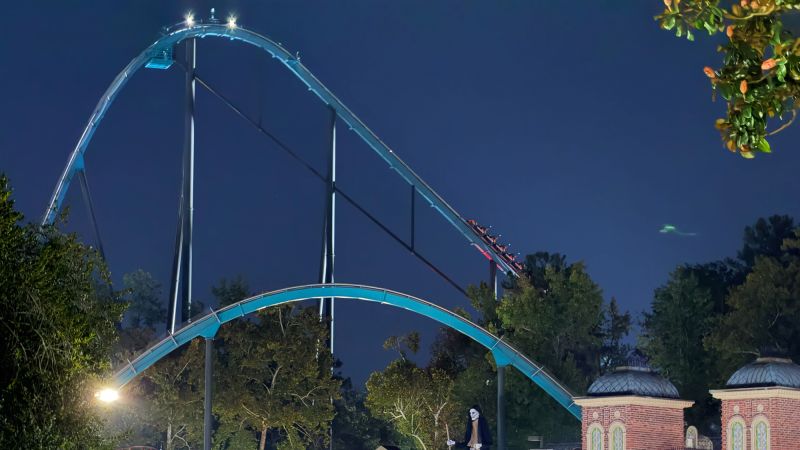
Six Flags Faces Renewed Scrutiny After Deadly Georgia Roller Coaster Accident
Goldlaner.com – Six Flags has temporarily shut down 10 rides across seven states after a fatal accident on the Goliath roller coaster at Six Flags Over Georgia, intensifying attention on the company’s maintenance history and safety practices.
Hassan Jihad Ibn Kariem, 42, died after falling from the coaster at the park outside Atlanta. Several other riders were injured in the incident. State authorities are investigating, while the park is conducting its own review.
The accident occurred shortly after another major Six Flags closure: X2 at Six Flags Magic Mountain was permanently taken out of service last month following years of reported injuries and mounting concerns about the ride.
Records show maintenance concerns at multiple parks
Safety documents and court filings from the past five years describe incidents at more than a dozen Six Flags parks in three states. The records include problems involving ride maintenance, a train derailment, malfunctioning restraint bars, and guest injuries such as concussions and dislocated joints.
Six Flags operates 30 amusement and water parks across 13 states, making it the nation’s largest theme park operator. The company said it maintains rigorous procedures for inspections, maintenance, and ride safety that meet or surpass industry standards.
“[We are] committed to rigorous ride inspection, maintenance and safety procedures that meet or exceed industry standards.”
Company representatives said guest injuries are treated seriously and reviewed. They also cautioned that the incidents cover different attractions, locations, years, circumstances, and state reporting systems, making broad comparisons difficult.
At Six Flags Over Georgia, the park’s president said every attraction is part of a comprehensive safety program centered on frequent inspections. The park has said it is cooperating with the Georgia investigation.
Financial pressures and deferred work allegations
The latest tragedy comes as Six Flags works through financial challenges following its 2024 merger with Cedar Fair. Recent financial statements have reflected weak attendance and substantial debt.
Two investor lawsuits filed last year accuse company leaders of postponing ordinary facility upkeep, infrastructure work, and ride improvements before the merger. The lawsuits also claim Six Flags cut staffing significantly during that period.
One suit alleges that the company did not make sufficient capital investments for routine maintenance or improvements to rides and attractions. Another says needed repairs had been deferred or skipped for years. Six Flags has not yet responded to those allegations in court.
Statements cited in the lawsuits suggest executives had identified a need to spend money on delayed projects. During investor calls last year, one executive referred to investment in “deferred items,” while another said the list of required improvements was consistently lengthy when asked about future spending.
Those claims do not establish the cause of any individual ride failure. Still, they raise broader questions for visitors, investors, and regulators about whether aging attractions receive enough ongoing attention before a serious incident occurs.
X2 closure followed years of injury concerns
Six Flags had already faced sharp criticism this summer over X2, one of the best-known roller coasters at Six Flags Magic Mountain. The ride had been associated with more than a dozen severe brain injuries, hospitalizations, and deaths over nearly two decades.
Last month, Six Flags permanently closed X2 after two women required emergency brain surgery six days apart in July. More than 100 riders had also come forward with brain-injury claims connected to the attraction.
Officials attributed the X2 shutdown to declining guest confidence. The closure came less than two weeks before the fatal Georgia accident, placing additional pressure on the company to explain how it identifies risks, responds to injury patterns, and decides when a ride should be modified or removed.
Ride accidents remain uncommon, but failures carry serious consequences
Theme park accidents are relatively rare when measured against the millions of rides taken each year. An industry report recorded roughly 1,500 injuries in 2024. Most were classified as involving visitor behavior or medical conditions, while about one-quarter involved technical or operational factors, including mechanical trouble or operator mistakes.
Even a low overall rate can offer little comfort after a catastrophic event. Roller coasters and other high-speed attractions depend on multiple systems working together, including track components, vehicles, restraints, sensors, operating procedures, inspections, and maintenance schedules.
Edward Pribonic, an amusement-ride engineer and safety expert who has served as an expert witness for plaintiffs suing Six Flags, said mechanical problems can arise even when operators follow established standards and manufacturer procedures.
“There is always the possibility of mechanical failure in spite of following all the standards and other specific procedures developed by manufacturers and operators.”
For riders, the immediate questions after an incident often center on what happened in a particular moment. The longer-term questions are wider: whether equipment was maintained correctly, whether warning signs were recognized, whether inspection systems were effective, and whether operators acted quickly enough when concerns emerged.
The Georgia investigation may address some of those questions as officials examine the Goliath accident. Until then, the temporary ride closures show that Six Flags is treating the event as one with implications beyond a single coaster or park.
Related Reading
Frequently Asked Questions
What is Government records reveal mechanical failures faulty?
Government records reveal mechanical failures faulty is the main topic of this guide. The article explains the context, practical details, and next steps readers should understand.
Why does Government records reveal mechanical failures faulty matter?
Government records reveal mechanical failures faulty matters because readers are looking for a useful answer, not just a short summary. Good content should match search intent and help them decide what to do next.