
Thousands of Refrigerators Were Hacked Across France
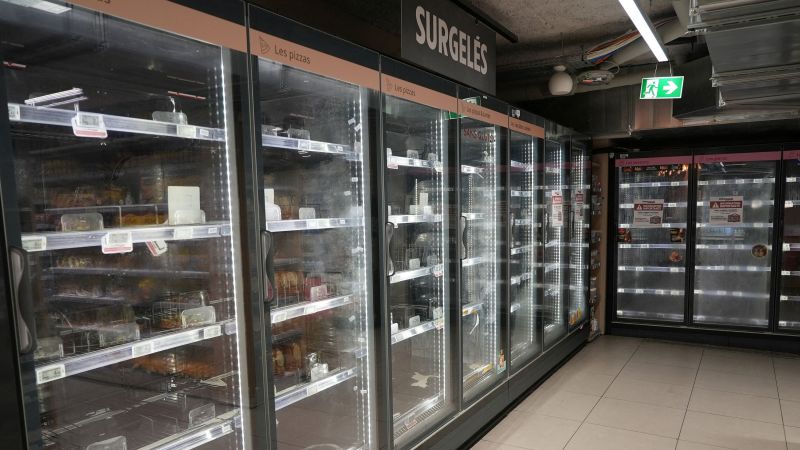
Goldlaner.com – Thousands of refrigerators were hacked across France after attackers remotely triggered defrost functions on connected refrigeration systems used by food retailers. The disruption affected about 700 stores, leaving businesses to deal with warming freezers, spoiled stock and water pooling around display units.
The incident has drawn national attention to the cyber risks facing internet-connected equipment in everyday commercial settings. French Economy Minister Roland Lescure called it a “wake-up call for everyone” while speaking to lawmakers on Tuesday.
Paris prosecutors are investigating what they described as a large-scale cyberattack involving connected refrigerators at major retailers nationwide. Authorities are assessing the extent of retailers’ losses and reports that some units overheated severely enough to catch fire.
Investigators Have Not Identified a Motive
No individual or group has publicly claimed responsibility, and no known ransom demand has been made. That leaves investigators examining several possibilities, including disruption, mischief, hacktivism or an attempt to unsettle businesses and the public.
“The hackers’ motivation is unknown at this stage.”
Félix Aimé, a principal threat researcher at French cybersecurity company Sekoia and a former employee of France’s national cyber agency ANSSI, said investigators cannot rule out either a lone hacker or a hacktivist collective. He also said an effort to disrupt economic activity or critical infrastructure remains a possible avenue of inquiry.
The apparent absence of malicious software on the affected controllers could make attribution harder. Without that evidence, investigators may have fewer technical clues connecting the intrusion to its source.
How Connected Refrigeration Systems Became a Target
Thousands of refrigerators were hacked by exploiting systems designed to make refrigeration management easier. Supermarkets often use online controllers so maintenance providers can check temperatures and adjust settings remotely instead of dispatching technicians to every location.
That remote access can become a weakness when equipment is outdated, improperly configured or exposed to the public internet. ANSSI said the incident involved controllers from Danish manufacturer Danfoss, US-based company Copeland and Dixell, a Copeland-owned company.
Danfoss said many affected devices were no longer receiving software or security updates, or were operating with outdated software. The company urged customers using supported equipment to install current firmware.
Copeland said it had identified a vulnerability in a discontinued, end-of-life generation of controllers and was working with affected customers to reduce risk.
Internet Exposure Increased the Risk
Before the attack, more than 1,700 instances of the affected Danfoss software were exposed online in France, according to Aimé. That potentially gave attackers a large pool of systems to identify and target remotely.
Cybersecurity firm Claroty had identified weaknesses involving Danfoss AK-SM 800A controllers earlier in the year. Its August report described a mechanism that could be used to bypass standard authentication, potentially allowing an intruder to alter temperature settings on affected equipment.
Ken Munro, a UK cybersecurity analyst and partner at Pen Test Partners, said publicly accessible equipment may have been exposed through an error by Danfoss or by contractors responsible for installing the systems. He said the absence of an extortion demand could point to a goal of disruption or public unease rather than direct financial gain.
The case shows why refrigeration controls should be treated as part of a company’s wider cybersecurity environment. A compromised controller can affect food safety, inventory, energy use and a store’s ability to operate, creating physical and financial consequences quickly.
FAQ: What the France Refrigerator Cyberattack Means
Were household refrigerators in France affected?
The reported attack involved connected refrigeration controllers used by food retailers. The information available does not indicate that ordinary household refrigerators were the target.
Why did hacked refrigerators cause food losses?
Attackers activated defrost functions, which caused refrigerated and frozen products to warm. Stores then faced spoiled goods, thawed stock and water from melting ice or condensation.
What should French retailers do now?
Retailers should identify internet-connected refrigeration controllers, confirm whether they are still supported, apply available firmware updates and limit unnecessary public internet access. Businesses should also review who can remotely access their equipment and monitor systems for unusual temperature changes.
How worried should consumers be?
Thousands of refrigerators were hacked in a commercial attack, but the incident is primarily a warning for organizations that operate connected equipment. Consumers can remain alert to food recalls or store notices, while retailers and equipment operators should focus on securing and updating their control systems.