
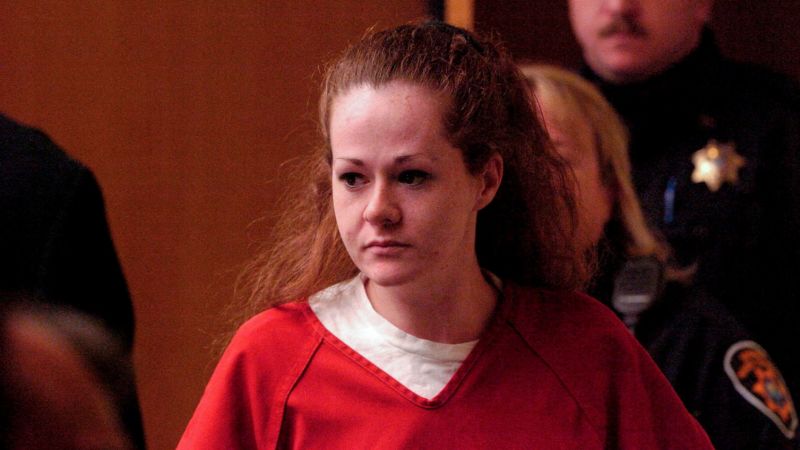
Christa Pike Returns to Tennessee Prison After Surviving Lethal Injection Attempt
Goldlaner.com – Christa Pike has left the hospital and returned to the Tennessee women’s prison where she had lived for three decades after surviving the state’s effort to execute her by lethal injection.
Pike, 50, has been transferred back to the Deborah K. Johnson Rehabilitation Center, where she is continuing to receive medical treatment. Her legal team said she had been hospitalized following the Sept. 30 execution attempt, during which she was given two doses of pentobarbital.
“She is grateful to the first responders and her medical team for their care in these extraordinary circumstances. She is continuing to receive medical care at the prison, and we will continue to track her recovery,” her attorneys said in a statement released Saturday.
Hospital Stay Ends, Medical Care Continues
The return to prison marks a new stage in Pike’s recovery after an execution procedure that did not result in her death. Her attorneys said she was discharged from the hospital before being taken back to the Deborah K. Johnson Rehabilitation Center.
The facility is Tennessee’s women’s prison and had been Pike’s place of incarceration for 30 years. Her lawyers did not provide further details about her medical condition, the length of her hospital treatment, or the care she is now receiving inside the prison.
The statement emphasized the role of emergency personnel and medical professionals who treated Pike in the aftermath of the attempt. It also made clear that her recovery remains under observation.
Execution Attempt Took Place Sept. 30
Tennessee attempted to put Pike to death on Sept. 30 using lethal injection. The state administered two doses of pentobarbital, but Pike survived the procedure and was later taken to a hospital.
Pentobarbital is a barbiturate that has been used in lethal-injection protocols. In an execution setting, the drug is intended to cause death. Pike’s survival after receiving the drugs has made the episode highly unusual in the modern history of capital punishment.
The Death Penalty Information Center identifies Pike as the first person known to have survived after lethal-injection drugs were administered during an execution. That distinction places her case in an exceptional category and raises difficult questions about what follows when an execution process does not achieve its intended outcome.
Her return to custody does not erase the extraordinary nature of what occurred. The medical response, her hospitalization, and the continuing treatment referenced by her attorneys reflect that the events of Sept. 30 extended beyond the prison execution chamber.
Case Stems From 1995 Killing
Pike had been scheduled for execution in connection with the 1995 killing of her classmate, Colleen Slemmer. She was convicted in the beating and stabbing death of Slemmer and has spent decades in Tennessee custody.
The case has remained among the state’s most closely watched death-penalty matters because of Pike’s long imprisonment and the severity of the crime. The failed lethal injection has now added another significant chapter to a case that had already moved through the criminal justice system for many years.
For readers following the case, the immediate confirmed development is limited but consequential: Pike is no longer hospitalized, she is again being held at the Deborah K. Johnson Rehabilitation Center, and her attorneys say medical care is continuing there.
What happens next will depend on legal and state decisions that were not addressed in the statement from Pike’s attorneys. The unusual outcome of the Sept. 30 procedure ensures that any future developments will draw close attention from courts, prison officials, death-penalty observers, and the public.
An Unprecedented Outcome
Executions are designed to be final acts of state authority, which is why a survival following the administration of lethal-injection drugs is so rare and consequential. Pike’s case now stands apart from the ordinary framework of capital punishment because the procedure itself was carried out but did not result in death.
The legal, medical, and ethical implications of such an event may continue to be debated, particularly as Pike recovers in prison. For now, her attorneys have focused on her physical condition, her appreciation for those who provided emergency care, and the fact that treatment remains ongoing.
Pike’s transfer from the hospital back to the Deborah K. Johnson Rehabilitation Center closes the immediate emergency phase of the episode. It does not resolve the broader questions left by an execution attempt that ended in survival.
Related Reading
Frequently Asked Questions
What is Christa Pike who survived an execution?
Christa Pike who survived an execution is the main topic of this guide. The article explains the context, practical details, and next steps readers should understand.
Why does Christa Pike who survived an execution matter?
Christa Pike who survived an execution matters because readers are looking for a useful answer, not just a short summary. Good content should match search intent and help them decide what to do next.