
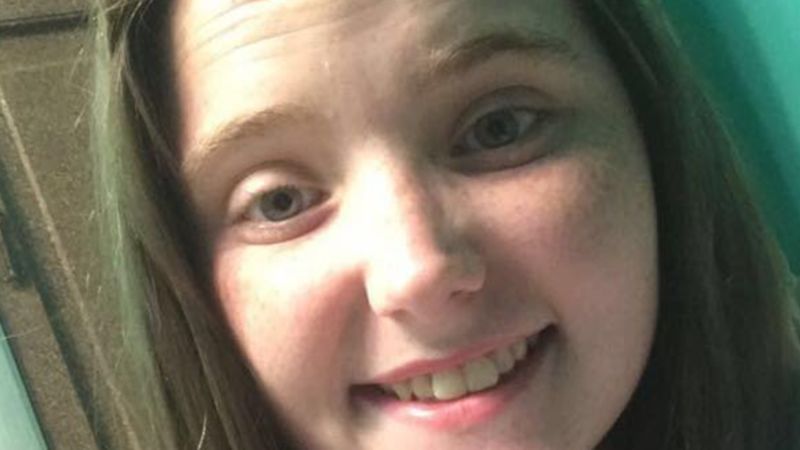
Former Massachusetts Officer Faces Federal Charges in Death of Young Woman He Mentored
Goldlaner.com – A former Stoughton police officer has gone on trial in Boston over the 2021 death of Sandra Birchmore, a 23-year-old woman whose death was initially classified as a suicide before federal authorities brought criminal charges.
Matthew Farwell, 40, is accused of killing Birchmore in her Canton, Massachusetts, apartment after she became pregnant. He has denied the allegations and pleaded not guilty. If convicted, he could receive a life sentence.
Birchmore was found on February 1, 2021, on the floor of her bedroom. A duffel bag strap was around her neck and attached to a closet-door handle. State and local investigators first concluded that she had taken her own life. Her family challenged that finding, maintaining that Birchmore had been looking ahead to becoming a mother and building her future.
The medical examiner’s office later changed the manner of death to “undetermined” in April. Farwell was indicted federally in 2024 and has remained jailed since his arrest in August of that year.
Competing accounts of Birchmore’s final hours
Opening statements presented jurors with sharply different explanations for Birchmore’s death. Federal prosecutor Torey B. Cummings described a long-running relationship in which Farwell exploited a teenager he had been expected to guide and protect through a police youth program.
Cummings told jurors that Farwell was 27 when he first had sex with Birchmore, then 15. Federal law prohibits sexual activity with someone younger than 16 when the other person is at least four years older. The prosecutor said Farwell continued the relationship for years, at times seeing Birchmore for sex while working as a police officer.
The prosecution contends that Birchmore’s pregnancy created a threat to Farwell because she held information that could expose him. Cummings told the jury that Farwell chose murder rather than risk disclosure.
“She could end his life with the information she had, so he decided to end hers first,” Cummings said.
Defense lawyer Kimberly Stevens acknowledged that Farwell, who was married, had an affair with Birchmore and made serious mistakes. But Stevens argued that an affair is not proof of homicide. She described Birchmore as isolated, anxious and facing financial hardship, with less than $3 in her bank account.
Stevens told jurors Birchmore became suicidal after Farwell ended their relationship on the night of her death. The defense characterizes the death as an “impulsive act of despair,” not a killing carried out by Farwell.
A mentoring program and an alleged abuse of trust
The case centers in part on Birchmore’s connection to the Stoughton Police Department’s Explorers program, a youth program intended to give local young people structure and exposure to law enforcement role models.
Birchmore’s mother enrolled her in the program in 2010 amid family health difficulties. Birchmore’s father was not involved in her life, prosecutors said. Cummings described Birchmore as a teenager who had struggled at school, had been diagnosed with ADHD and found it hard to form friendships.
She was deeply interested in police work and spent substantial time around the department, the prosecutor said. Farwell was among the officers she trusted. In late 2012, when Birchmore was 15, he sent her a Facebook friend request and later began tutoring her at a local library.
Cummings portrayed those early interactions as the beginning of grooming, arguing that a young person who admired police officers was taken advantage of by an adult officer in a position of authority. The prosecution’s account presents Birchmore not simply as a former romantic partner, but as someone Farwell was meant to mentor.
The distinction carries significance beyond the alleged relationship itself. Jurors will be asked to consider the power imbalance described by prosecutors, Birchmore’s vulnerability and whether Farwell’s conduct ultimately led to her death.
Pregnancy allegation and potential punishment
Farwell faces a charge of killing a witness or victim, based on the allegation that Birchmore was killed to prevent her from providing information that could incriminate him. A second count concerns her pregnancy and a federal statute designed to protect unborn children.
Later DNA testing excluded Farwell as the biological father of Birchmore’s unborn child. Prosecutors maintain that he believed the baby was his when Birchmore died, making his understanding at the time a central issue in their theory of motive.
Farwell has been decertified as a police officer and is prohibited from working in Massachusetts law enforcement. His trial is being held at the John J. Moakley Courthouse and is expected to continue for roughly a month.
Six of Birchmore’s cousins attended the opening statements. In the courtroom, Farwell sat with his two attorneys in a charcoal-gray suit, mostly looking at a computer at the defense table. The prosecution repeatedly referred to him as “the defendant,” while Stevens used “Matt” in addressing the jury and at one point rested an arm on his shoulder.
The trial will test two irreconcilable narratives: prosecutors’ claim that an officer murdered a former youth-program participant to conceal a damaging relationship, and the defense position that Birchmore died by suicide after a painful breakup.
Related Reading
Frequently Asked Questions
What is Sandra s first sexual experience involved?
Sandra s first sexual experience involved is the main topic of this guide. The article explains the context, practical details, and next steps readers should understand.
Why does Sandra s first sexual experience involved matter?
Sandra s first sexual experience involved matters because readers are looking for a useful answer, not just a short summary. Good content should match search intent and help them decide what to do next.