
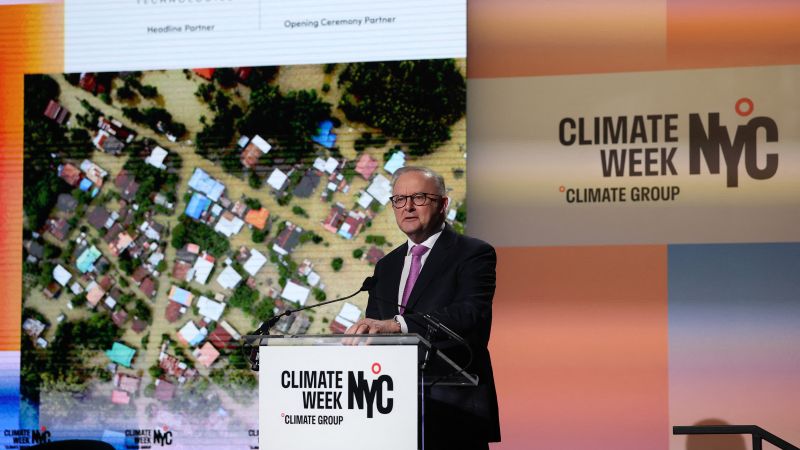
AI and Power Demand Reshape the Conversation at New York Climate Week
Goldlaner.com – New York Climate Week has long served as a barometer for the global climate movement, drawing activists, diplomats, investors, journalists, technology companies and business leaders each September. Held alongside the United Nations General Assembly, the gathering usually puts emissions cuts, clean-energy commitments and climate targets at the center of the agenda.
This year, the tone shifted. Climate concerns remained present, but many of the most urgent conversations were framed around a different question: how can the electricity system grow fast enough to support artificial intelligence and the enormous data centers behind it without triggering a new wave of fossil-fuel construction?
The change was visible across panels, private meetings and industry events. Rather than treating climate change as the headline topic, speakers often focused on grid expansion, reliability, energy supply and the challenge of bringing more power online quickly. The word “climate” itself was noticeably less prominent in many discussions, even when the underlying issues were deeply connected to it.
Electricity Becomes the Central Challenge
The rapid expansion of AI has made electricity demand a defining issue for technology companies, utilities, local governments and energy developers. Data centers require substantial, continuous power, and the pressure to meet that demand is colliding with efforts to move away from planet-warming fuels.
That tension became a major theme at events focused on electrifying the economy. Electrification is essential to a cleaner energy system because renewable sources such as wind and solar deliver electricity, not gasoline or natural gas. As more vehicles, buildings and industrial processes rely on electricity, the ability to build and connect clean generation becomes increasingly important.
But AI-related data centers have added a new layer of urgency. Their growth has intensified debates over where facilities should be built, how they affect local power systems and whether nearby communities will bear higher costs or environmental burdens. Officials from both political parties, including governors and mayors, discussed the growing public resistance to large data-center projects and the changing politics surrounding them.
For local leaders, the issue is not only about technology investment. It also involves land use, transmission infrastructure, water concerns in some locations, reliability planning and the public expectation that new development should create meaningful benefits for communities.
A Different Language for the Same Crisis
Another defining theme was resilience. Businesses, governments and individuals increasingly discussed how to withstand climate-driven disasters that are becoming more frequent and severe. The conversation covered the practical effects of extreme weather on homes, supply chains, food production, infrastructure and insurance.
In meetings across sectors, including insurance and major food production, many professionals emphasized resilience more often than climate action. The distinction may seem small, but it reveals an important shift in emphasis. Resilience focuses on preparing for damage that is already happening or expected soon, while emissions reduction addresses the causes of future warming.
Both are necessary. Cutting emissions remains crucial for limiting the scale of long-term harm, while adaptation and resilience are increasingly unavoidable because climate impacts are already being felt. The balance between those priorities appeared to be changing at this year’s gathering.
Climate Targets Meet a Harder Reality
For roughly a decade, Climate Week discussions have reflected changing priorities in the climate world. Earlier years put strong attention on emissions goals, corporate pledges, timelines and the deployment of promising low-carbon technologies. Those subjects did not disappear, but they faced competition from immediate concerns about power demand, physical risk and economic growth.
There was also a broader recognition that major climate goals are becoming harder to achieve. The Paris Climate Agreement set an ambition to limit global warming to 1.5 degrees Celsius above preindustrial levels. Many participants now appear to be confronting the likelihood that the world will miss that threshold, even as rapid and substantial emissions cuts remain essential.
This does not mean climate targets no longer matter. Instead, it reflects a more difficult reality: the consequences of warming will continue even if emissions fall sharply in the near future. Communities and companies are therefore preparing for risks that were once discussed mainly as future possibilities.
Climate change has moved from a distant threat to a crisis that is already shaping economic and political decisions.
The Risk of Losing Focus
The rise of AI has created a powerful economic incentive to expand digital infrastructure. Data centers are now central to the race to develop and deploy advanced AI systems, and reliable electricity has become a strategic requirement. Yet the rush to supply that power could weaken climate progress if new demand is met primarily with fossil fuels.
The key challenge is whether clean-energy deployment, transmission upgrades, storage and efficiency measures can move quickly enough to support the new demand. If they cannot, pressure may grow for additional gas-fired generation or other fossil-fuel infrastructure that could remain in use for decades.
That is why the apparent shift in language at Climate Week matters. Conversations about grids, data centers and resilience are not separate from climate policy. They are now part of the central test of whether the energy transition can keep pace with the broader economy.
New York Climate Week still offered a wide range of perspectives and priorities. Yet the clearest signal was that the climate agenda is being reshaped by two forces at once: the expanding appetite for AI-powered computing and the mounting consequences of a warmer world. The challenge ahead is to ensure that the response to one does not deepen the other.
Related Reading
Frequently Asked Questions
What is How AI took over a key climate?
How AI took over a key climate is the main topic of this guide. The article explains the context, practical details, and next steps readers should understand.
Why does How AI took over a key climate matter?
How AI took over a key climate matters because readers are looking for a useful answer, not just a short summary. Good content should match search intent and help them decide what to do next.