
A Taylor Neighborhood’s Park Promise Faces a New Test
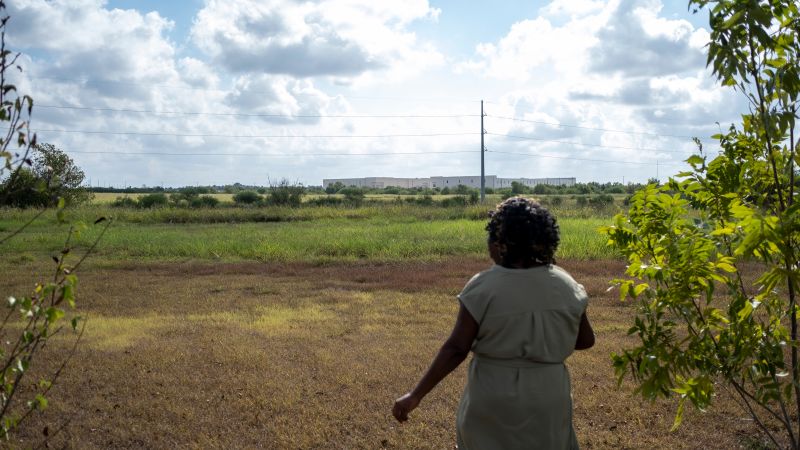
Goldlaner.com – In Taylor, Texas, a retired educator is trying to protect a long-standing vision for a large piece of land near her home: a public park for the surrounding community. Instead, the 87-acre property, located about 25 miles from Austin, could become a data center.
For Pamela Griffin, the conflict is not simply about future construction. It is tied to family history, childhood memories, and a commitment she says was made decades ago to create recreational space for local children. A sentence included in a 1999 deed was intended to preserve the land for park use, but that language was not included in later transfers of ownership.
Griffin, 58, is now challenging the proposed development in court. Her case is before a Texas appeals court as she seeks to prevent the project from advancing. At the same time, Texas Attorney General Ken Paxton has opened an investigation into whether the original restriction on the property was legally altered or removed, and whether it remains enforceable.
A Fight That Took Over Retirement
Griffin had expected retirement to offer a slower pace. Instead, she has spent recent months organizing neighbors, going to public meetings and speaking publicly about the land’s future.
Residents of Taylor, a city of about 18,000 people, share concerns often raised when data center proposals emerge in smaller communities. Questions include the potential for persistent noise, high water demand and added pressure on the electrical system. For Griffin, those practical concerns are inseparable from the question of whether the property was ever meant to be developed privately at all.
“My daddy passed this land down to us and he told us to guard this land,” she said. “He said this will always be a homestead.”
Her family’s connection to the neighborhood reflects a broader story of landownership and opportunity in Texas. The dispute has also brought renewed attention to who has historically gained from property ownership in the state and who has been left out.
Roots in Taylor’s Black Community
During the 1950s and early 1960s, Griffin’s grandmother worked as a maid while also chopping and picking cotton. Taylor had long been associated with cotton production and cattle ranching. After the Fair Housing Act prohibited racial discrimination in housing sales, rentals and financing based on race, color, religion or national origin, Griffin’s grandmother purchased property on the city’s south side.
She acquired parcels for each of her eight children, hoping they would have a lasting place to call home. That goal endured across generations. Griffin eventually returned to the house her father built and where he raised six children after she had left Taylor following high school.
The home holds the markers of a family life built over decades: photographs, keepsakes and small mementos carefully placed throughout the rooms. Returning in 2019 after both parents had died, Griffin felt responsible for preserving both her family’s legacy and the neighborhood that had shaped her.
Childhood Recreation Was Limited
Growing up in the 1970s, Griffin knew that nearby recreational options were limited. She recalls that her parents and other adults in the neighborhood stopped allowing children to use Fannie Robinson Park after some young people developed rashes or became ill.
The park had previously been used as a city dump. In 1955, it became Taylor’s first park designated for Black residents after a Black physician worked with city and school officials to secure recreational land for children of color.
With few reliable places to play, an empty lot behind Griffin’s home became an informal gathering place. Her father had purchased the lot, and she and neighboring children used it for baseball, games and makeshift camping trips. Cardboard boxes and bedsheets became shelters as they watched the stars on Texas nights.
The lot sat beside the much larger tract owned by descendants of Howard Bland Sr., a well-known Taylor businessman, community leader and state lawmaker during the late 19th century. Griffin remembers children walking onto the property to retrieve baseballs that had gone astray.
She says the Bland family understood how much the neighborhood needed open space and spoke with her father about their hope that the land could eventually serve as a park.
“The Blands understood the community in a way others did not and was willing to help when nobody else was not,” Griffin said.
What the Deed Language Could Decide
The central legal issue is a brief provision in a 1999 deed. Though only 14 words long, the clause has become critical to determining whether the tract can be used for a data center or must remain reserved for public recreation.
As ownership changed, the wording was not carried into later documents. Griffin’s legal challenge focuses on whether the original park-related restriction still applies despite its absence from subsequent deeds. The attorney general’s investigation addresses related questions about whether the language was properly changed or removed.
The outcome could shape much more than one development proposal. It may determine whether a promise made to a historically underserved neighborhood can survive changing ownership records and growing demand for land near Austin.
For Taylor residents, the debate places competing visions of the future side by side. Data centers are increasingly sought as infrastructure for digital services and artificial intelligence, but their proposed arrival can also raise concerns about local resources and quality of life. In this case, those worries are layered over a much older commitment to community space.
Griffin’s campaign began after she discovered a flyer on her front door last year, setting in motion an effort to understand what had happened to the park she had expected for much of her life. What began as a personal discovery has become a public struggle over land, memory and the future of a neighborhood.
Related Reading
Frequently Asked Questions
What is A Texas woman is fighting to preserve?
A Texas woman is fighting to preserve is the main topic of this guide. The article explains the context, practical details, and next steps readers should understand.
Why does A Texas woman is fighting to preserve matter?
A Texas woman is fighting to preserve matters because readers are looking for a useful answer, not just a short summary. Good content should match search intent and help them decide what to do next.