
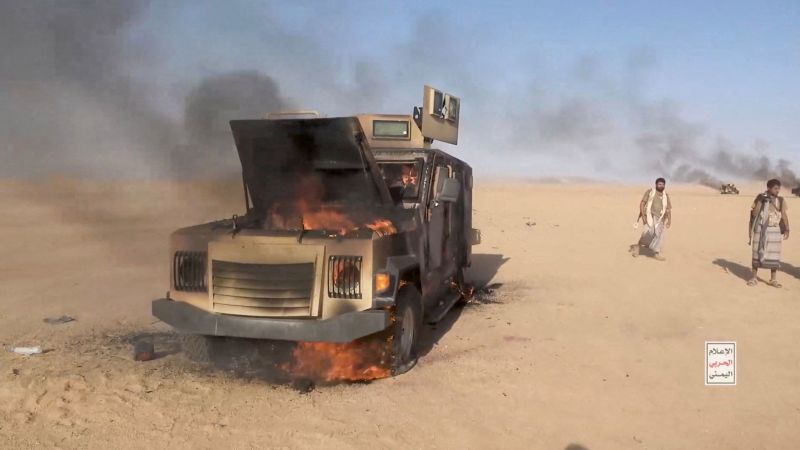
Houthis widen conflict as pressure builds on Saudi Arabia
Goldlaner.com – Frustration grows as Houthis widen their campaign in Yemen and the Red Sea, putting Saudi Arabia under renewed military pressure while the United States avoids direct offensive action. The Iran-backed movement’s capture of a strategically important Red Sea island has increased concern about commercial shipping and regional security.
The Houthis are seeking greater influence around the Bab al Mandeb Strait, a vital maritime route linking the Red Sea and the Indian Ocean. Disruption there could affect ships traveling between the Mediterranean, the Suez Canal and international markets.
Saudi-backed forces face renewed setbacks
US and Gulf officials are concerned that Saudi-backed Yemeni forces may not be able to stop further Houthi gains without stronger outside assistance. Washington has expanded intelligence sharing and provided targeting information, but it has shown little willingness to join an offensive military campaign.
Saudi-backed government forces have fought the Houthis for more than a decade during Yemen’s devastating civil war. The group receives support and training from Iran’s Islamic Revolutionary Guard Corps. A United Nations-mediated truce in 2022 temporarily reduced fighting, but the conflict has intensified again in recent weeks.
Officials and former diplomats familiar with the conflict say the weaknesses of Saudi-supported forces have been evident for years. US intelligence assessments had warned that the Houthis could threaten another commercial shipping route, adding to wider instability following Iran’s actions earlier this year.
Frustration grows as Houthis widen their coastal control and bring the consequences of the war closer to Saudi territory. The latest advances challenge earlier confidence in the Yemeni government military after years of Saudi-backed training and support.
Missiles and drones raise the stakes for Riyadh
Saudi Arabia has accused the Houthis of targeting Mecca, Islam’s holiest city. The Houthis have said they downed a Saudi F-15 fighter jet, while warning alerts sounded across Riyadh during the past day—the first direct threat to the Saudi capital since the escalation began in July.
The Houthi movement said it used drones and missiles on Saturday to strike “sensitive” sites in Riyadh and an Aramco facility in Yanbu. It did not identify the exact locations in the capital. Video showed a large plume of dark smoke near Riyadh’s main airport, though the cause was not immediately clear.
Saudi Arabia’s military said late Saturday that its air defenses destroyed a ballistic missile launched toward Riyadh at dawn and stopped other attempted attacks elsewhere in the country. The attacks have heightened fears over the kingdom’s infrastructure, public safety and energy facilities.
US support stops short of direct strikes
President Donald Trump has drawn a firm boundary around US involvement: American forces will not directly take part in offensive operations against the Houthis. US support remains focused on intelligence and targeting assistance for Saudi operations.
“No offensive strikes,” a US official said.
Saudi Crown Prince Mohammed bin Salman spoke with Trump twice last week to request US military strikes against the Houthis, but the request was not accepted. Gulf and US officials worry that the decision could signal reluctance in Washington to defend regional partners through direct military action.
Trump said in comments to reporters in Ireland last weekend that the Houthis did not want to fight the United States. Still, frustration grows as Houthis widen the conflict’s reach, forcing Saudi Arabia to confront threats at home as well as on Yemen’s battlefield.
Frequently asked questions
Why is the Bab al Mandeb Strait important? The strait is a major shipping passage connecting the Red Sea with the Gulf of Aden and the Indian Ocean. Instability there can threaten commercial vessels and affect traffic connected to the Suez Canal.
What support is the United States providing Saudi Arabia? The United States has provided intelligence sharing and targeting information for Saudi operations, but it is not participating directly in offensive strikes against the Houthis.
Why are Houthi attacks on Saudi Arabia significant? Missile and drone attacks expand the conflict beyond Yemen, increasing pressure on Saudi security, critical infrastructure and the wider regional energy supply.