
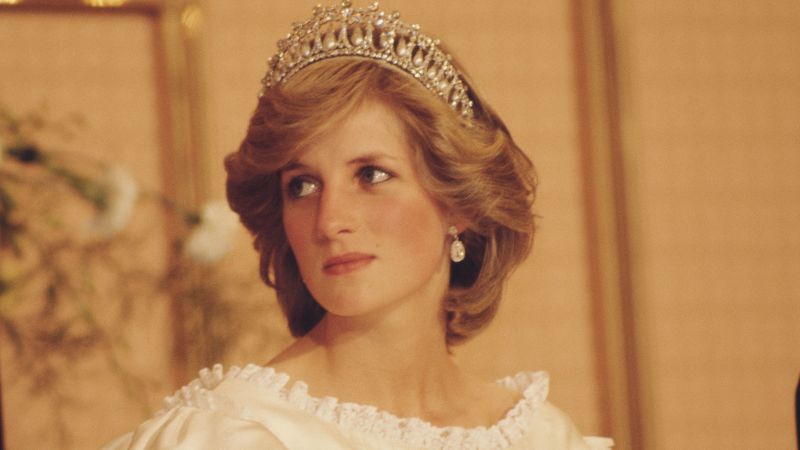
Charles Spencer’s Memoir Revives Dispute Over Diana’s Funeral
Goldlaner.com – Nearly three decades after Princess Diana’s death, a forthcoming memoir by her brother, Charles Spencer, is set to reopen painful questions about the days that followed the crash in Paris and the decisions surrounding her funeral.
Spencer writes in Swan Song that he had a deeply strained telephone conversation with King Charles III, then the Prince of Wales, shortly after Diana died in August 1997. The book is due for publication next week and is expected to contain strong criticism of the royal family.
Diana, Princess of Wales, died after sustaining internal injuries in a high-speed car crash in Paris. Her sons, Prince William and Prince Harry, were 15 and 12 years old when they joined the funeral procession a few days later. The image of the two boys walking behind their mother’s coffin remains one of the most recognizable and emotionally charged moments of the period.
A disagreement over William and Harry
Spencer says the argument began when he objected to William and Harry taking part in the public procession. In his account, he believed Diana would not have wanted her sons to face that experience while grieving.
He describes Charles as speaking at length in anger while Spencer remained silent. The memoir portrays the pause that followed as something Spencer initially interpreted as an attempt to regain composure. Instead, he says, Charles made a remark that Spencer viewed as revealing hostility toward Diana and unease at the scale of public mourning.
“Rest assured,” he hissed, “we’ll forget her soon enough!”
Spencer recounts responding with disbelief before ending the call.
“I can’t believe you just said that,” I said flatly, before hanging up.
The alleged exchange is central to the excerpts from the memoir and reflects the long-running tensions surrounding Diana’s relationship with the royal family, her public standing and the handling of her death.
Palace response challenges Spencer’s account
Buckingham Palace rejected the implication of Spencer’s claims in an unusually forceful response that directly referenced the King’s reaction. While maintaining the usual position of not commenting on books, a palace spokesperson said grief can alter the way people assess and remember events.
“While we do not comment on books as a matter of principle, His Majesty is mindful that the pain of fraternal grief can cloud reason, affect judgment and color memory in ways others do not recognize, even many years after such a loss.”
The statement does not directly address the wording attributed to Charles in the memoir. Instead, it raises doubts about whether Spencer’s recollections from the immediate aftermath of his sister’s death should be treated as a complete account of events.
That response places the dispute in a difficult territory: a conflict over private conversations in a period marked by extraordinary shock, grief and public scrutiny. Spencer’s interpretation is presented in his own memoir, while the palace’s statement makes clear that it does not accept the account at face value.
The lasting significance of the funeral procession
The question of whether William and Harry should have walked in Diana’s funeral procession has remained sensitive because both princes were children at the time. The ceremony unfolded amid an immense public response to Diana’s death, with crowds gathering in London and around royal residences to leave flowers and tributes.
For many people, the procession became inseparable from memories of Diana’s death: two young princes, their father, their uncle and their grandfather moving through a city consumed by mourning. Spencer’s account suggests that the decision was contested privately before it became one of the defining public images of 1997.
His memoir also appears likely to revisit a broader divide between Diana’s private family relationships and the institutional pressures surrounding the monarchy. Her death triggered grief across Britain and far beyond it, while also creating a moment of intense scrutiny for the royal household.
The book has not yet been independently reviewed in full, and its wider arguments will become clearer when it is published. Still, the extracts have already brought renewed attention to the fraught atmosphere after Diana’s death and to the enduring disagreement over how her family and the monarchy responded in those days.
For Spencer, the disputed phone call represents a deeply personal memory of losing his sister. For the palace, the response emphasizes the limits of memory under grief. The opposing accounts ensure that the aftermath of Diana’s death, like so much of her life, continues to carry powerful emotional and historical weight.
Related Reading
Frequently Asked Questions
What is Princess Diana s brother claims Charles?
Princess Diana s brother claims Charles is the main topic of this guide. The article explains the context, practical details, and next steps readers should understand.
Why does Princess Diana s brother claims Charles matter?
Princess Diana s brother claims Charles matters because readers are looking for a useful answer, not just a short summary. Good content should match search intent and help them decide what to do next.