
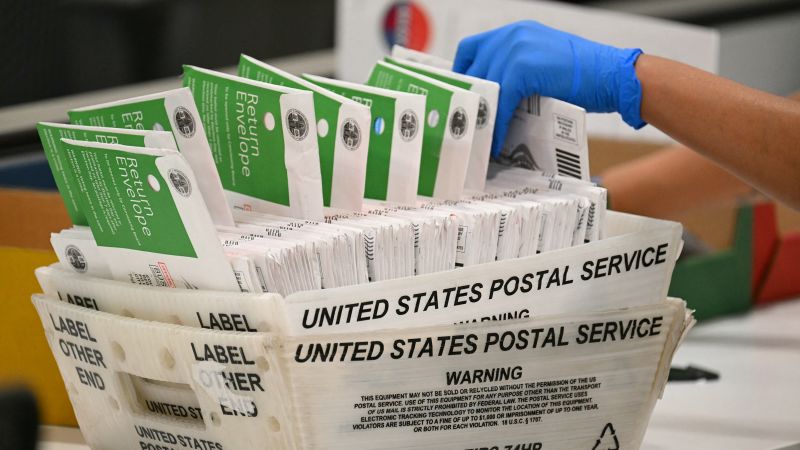
The Supreme Court’s Cryptic Mail Ballot Decision Leaves Questions
Goldlaner.com – The Supreme Court’s cryptic mail ballot decision has temporarily blocked the Trump administration from allowing the US Postal Service to potentially decline delivery of mailed ballots. The ruling is an immediate win for Democratic-led states and voting-rights groups, but the court’s short order offers little guidance about how it may handle future disputes over voting by mail.
With the 2026 midterm elections approaching and attention already turning toward the 2028 presidential race, mail voting remains a major legal and political issue. The court stopped the Postal Service regulations from taking effect while the underlying lawsuit proceeds, leaving the broader constitutional and statutory questions unresolved.
A Narrow Emergency Ruling
The unsigned order was only two sentences long. The justices said the federal government was unlikely to succeed in its challenge to the lower court’s preliminary injunction and had not satisfied the standards required for emergency relief.
The Government is unlikely to succeed on the merits of its challenge to the District Court’s preliminary injunction. And the equitable factors applicable for obtaining emergency relief from this Court do not favor a stay.
The Supreme Court’s cryptic mail ballot decision addresses the government’s request to put the lower-court injunction on hold; it does not settle every question about Postal Service authority or the long-term treatment of mailed ballots. Lower courts had considered issues including the powers of the parties and whether the proposed ballot-screening system could work in practice. The Supreme Court did not discuss those issues individually.
That limited language may have allowed justices with differing views on election law to agree on the immediate outcome. It also means the decision should not be treated as a broad declaration about the legality of mail voting. For now, the court has ruled only that the administration did not meet the high bar for emergency intervention.
Justices Still Differ on Voting by Mail
The court’s six-member conservative majority has not taken a single approach to mail-in voting cases. A June decision rejecting another proposed set of restrictions on mailed ballots was decided by one vote, showing that future cases could turn on their specific facts, legal arguments and timing.
Justices Samuel Alito and Clarence Thomas have echoed Trump administration arguments about alleged fraud involving voting by mail, although evidence has not shown mailed ballots to be inherently connected to widespread fraud. Alito dissented from Monday’s ruling, underscoring the disagreement within the court.
Justice Brett Kavanaugh joined the court’s immediate disposition but wrote separately to suggest that the Postal Service could ultimately have the legal authority claimed by the administration. He said there was “at least a fair prospect” that the final regulation falls within the agency’s statutory powers. That view could matter if a similar dispute returns to the court in a future election cycle.
Why the Decision Matters for Elections
Election cases often reach the Supreme Court under intense time pressure. Judges must weigh federal authority, state election administration, ballot access and the possibility that a late rule change could confuse voters. The effects can be significant when a disputed policy changes how ballots are delivered, received or counted.
Donald Verrilli, a Washington lawyer who served as US solicitor general during the Obama administration, said mail-ballot litigation is likely to remain unsettled through the current election period and into the next presidential contest. Speaking at a Georgetown Law panel, he said the issue could continue to generate political conflict.
As the rest of this electoral cycle unfolds, and into 2028, I think there’s going to be a lot of turbulence around these issues.
The debate also reflects the continuing impact of the 2020 election. Trump lost to Joe Biden but continued to claim the result was fraudulent. Those claims have remained part of arguments over election procedures, even as voting-related disputes continue to move through state and federal courts.
Mail Ballot Decision FAQ
What did the Supreme Court decide?
The court kept a lower-court injunction in place, preventing the Postal Service regulations from taking effect while the lawsuit continues. The ruling was temporary and did not decide the entire case.
Does the ruling change how voters can cast mail ballots now?
The immediate effect is that the challenged regulations remain blocked. Voters should continue to follow instructions from their state and local election officials about ballot requests, deadlines, delivery and return options.
Could the issue return to the Supreme Court?
Yes. Because the Supreme Court’s cryptic mail ballot decision did not resolve the underlying legal dispute, later rulings in the case or similar election disputes could bring the issue back before the justices.
Related Reading
Frequently Asked Questions
What is The Supreme Court s cryptic mail?
The Supreme Court s cryptic mail is the main topic of this guide. The article explains the context, practical details, and next steps readers should understand.
Why does The Supreme Court s cryptic mail matter?
The Supreme Court s cryptic mail matters because readers are looking for a useful answer, not just a short summary. Good content should match search intent and help them decide what to do next.