
Fed Decision Looms as Treasury Yields Test the Market’s Confidence
Goldlaner.com – Investors are heading into this week’s Federal Reserve meeting with Treasury yields already at levels that have not been seen in nearly two decades. The sharp move in bonds has increased the pressure on policymakers to demonstrate that they remain focused on inflation, even as higher borrowing costs spread through the wider economy.
Financial markets are overwhelmingly positioned for the Fed to lift its benchmark rate by a quarter of a percentage point on Wednesday, its first increase since 2023. CME FedWatch showed a 93% probability of a hike before the decision, leaving little room for an unexpected pause without a potentially forceful market response.
The 10-year Treasury yield rose on Tuesday and briefly reached its highest point since 2007. It had closed at 4.6% on July 29 and has since moved above 5%. Because bond values fall when yields rise, the climb reflects a sustained wave of selling in government debt.
A decision with consequences beyond Washington
Higher Treasury yields matter far beyond the bond market. They influence the rates paid by households on mortgages, auto loans and other forms of credit, while also raising financing costs for businesses and the federal government. A continuing increase in long-term yields could also unsettle stock investors, particularly if markets conclude that inflation risks are not being contained.
For much of the past several weeks, traders appeared divided on whether the central bank would act in September. Expectations swung close to an even split between a rate increase and no change. Inflation data released on Friday altered that calculation after consumer price pressures remained persistent in August.
The policy challenge has become more difficult as inflation has worsened since the beginning of the war with Iran. Investors will be listening closely for evidence that the Fed intends to prevent those pressures from becoming embedded in the economy.
“At this stage, it would be very difficult for the Fed to leave rates unchanged this week without eroding its inflation-fighting credibility,” Vail Hartman, US rates strategist at BMO Capital Markets, said in a note.
Hartman argued that the central bank rarely departs from a policy outcome that markets have anticipated with such a high degree of confidence.
“Historically, the Fed has seldom deviated from rate decisions that markets have priced with such high conviction,” Hartman said.
A decision to keep rates unchanged could produce a complicated reaction across markets. Shorter-term Treasury securities could rally as investors reassess the immediate path for Fed policy, while longer-dated government bonds, the dollar and risk-sensitive assets could face renewed selling pressure.
Warsh’s remarks may matter as much as the rate move
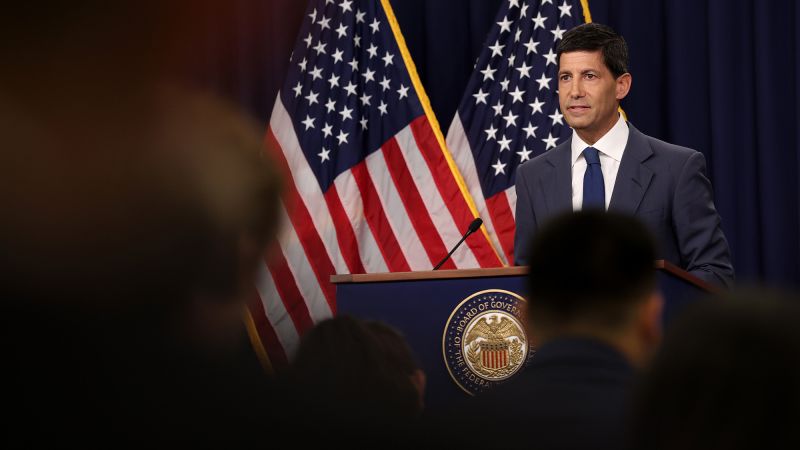
Even if the Fed delivers the widely expected quarter-point increase, Chairman Kevin Warsh will face intense scrutiny during his post-meeting remarks. Investors are likely to focus on how he characterizes inflation, the rise in market yields and the prospect of further policy tightening.
At the July meeting, Warsh said he wanted asset prices to respond to economic evidence instead of attempts to anticipate the Fed’s next move. He noted the rise in Treasury yields at that time and portrayed it as a market response to underlying conditions.
“Market participants are learning to play the ball, not the referee — and market prices will continue to respond in the direction and magnitude they see fit,” Warsh said on July 29. “This is, in my view, a change for the better — and we’re just getting started.”
Treasury yields have risen further since then. The two-year yield, often viewed as a measure of expectations for near-term Fed policy, is now at its highest level in more than two years. It stands roughly 100 basis points, or one percentage point, above the Fed’s benchmark rate.
That gap has heightened the argument that the market is already signaling a need for tighter policy. Warsh had said in July that he wanted an “unfiltered message from markets.” The message investors appear to be sending before Wednesday’s meeting is that they expect the Fed to respond.
“[Warsh] has been talking hawkishly since June. Now, he has to deliver a rate hike,” Ed Yardeni, president of Yardeni Research, said in a note.
“After all, he promised to follow the financial markets’ lead. The 2-year and 10-year yields are clearly calling for a rate hike,” Yardeni said. “If they keep rising after Warsh’s presser on Wednesday, then he will still have a credibility problem.”
Why yields have risen so quickly
The Treasury market is being pushed by more than one concern. Investors have been weighing increased corporate debt issuance, growing government borrowing, inflation worries, expectations for rate increases by central banks and broad uncertainty connected to the Middle East conflict.
When these forces converge, longer-term yields can move higher even if the Fed’s official policy rate changes only gradually. That distinction is important for consumers: the central bank sets its benchmark rate, but many real-world borrowing costs are shaped more directly by market interest rates, especially the yield on the 10-year Treasury note.
George Goncalves, head of global rates strategy at MUFG, had initially expected the Fed to leave rates unchanged in September. The market backdrop and inflation developments prompted him to shift to a forecast for a hike.
Wednesday’s announcement therefore carries significance beyond the immediate quarter-point question. A rate increase that matches expectations may avoid the shock of a surprise, but it will not automatically end the bond-market sell-off. Investors will be looking for a convincing explanation of how the Fed plans to restore confidence that inflation will move lower.
If yields continue advancing after the decision, it would suggest that markets want a stronger response or remain concerned about the amount of debt entering the market. If they stabilize, it could indicate that investors believe the central bank’s policy stance is becoming more aligned with inflation risks. Either way, the Fed meeting has become a critical test for the bond market and for Warsh’s credibility.
Related Reading
Frequently Asked Questions
What is The Fed meeting is a pivotal?
The Fed meeting is a pivotal is the main topic of this guide. The article explains the context, practical details, and next steps readers should understand.
Why does The Fed meeting is a pivotal matter?
The Fed meeting is a pivotal matters because readers are looking for a useful answer, not just a short summary. Good content should match search intent and help them decide what to do next.