
Israel Recasts Its Diplomatic Priorities as European Pressure Builds
Goldlaner.com – Israel is placing greater diplomatic emphasis on sympathetic smaller states while its relationships with several long-standing Western European partners become increasingly strained over settlements and violence in the occupied West Bank.
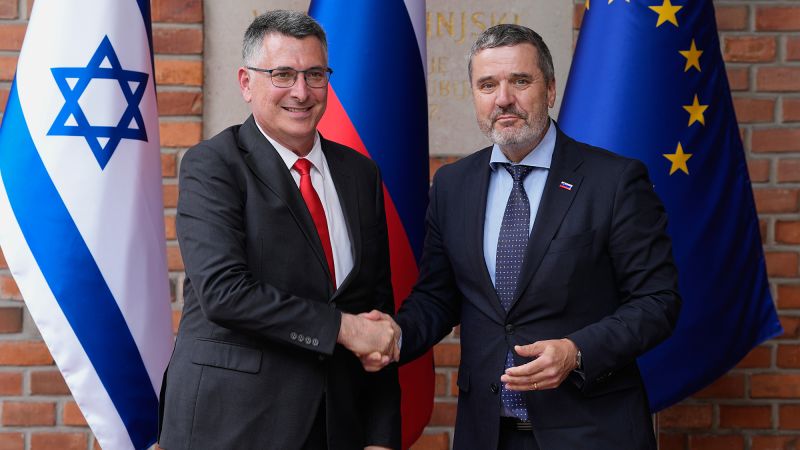
The contrast was visible in a series of recent diplomatic events led by Foreign Minister Gideon Saar. In Jerusalem, he attended the opening of Nauru’s new embassy and warmly described the Pacific nation, home to about 12,000 people, as a particularly close friend of Israel internationally. Soon afterward, Saar traveled to Ljubljana to inaugurate Israel’s embassy in Slovenia, praising the country’s new center-right government for supporting Israel within the European Union.
Israel also brought a sizable business delegation to Slovenia, underscoring the importance it attaches to the renewed relationship. Ljubljana had previously been among Israel’s sharper European critics, but it is now viewed in Jerusalem as a valuable partner in EU discussions.
At the same time, Israel has no ambassador in London. The position has been vacant for nearly a year after Prime Minister Benjamin Netanyahu’s planned envoy, chief of staff Tzachi Braverman, was prevented from leaving Israel because of a criminal investigation.
Sanctions Deepen the Divide
The absence of an ambassador comes as the United Kingdom and 11 other countries introduced coordinated sanctions and trade restrictions aimed at Israeli settlements in the West Bank. The measures represented one of the strongest recent diplomatic confrontations between Israel and Britain.
UK Foreign Secretary Ed Miliband linked the new steps directly to Israel’s decision to advance the E1 settlement project. Critics argue that development in the area could divide the West Bank geographically and make a contiguous Palestinian state far more difficult to establish.
The latest action follows a broader shift among Western governments. In September 2025, Britain, Canada, France and more than a dozen other Western states recognized Palestinian statehood. In June, the United Kingdom, Canada, France, Norway, Australia and New Zealand announced coordinated sanctions against people and networks accused of helping finance or facilitate settler violence.
Several European countries have gone further with individual measures. France barred far-right Finance Minister Bezalel Smotrich from entering the country. Italy opened an investigation involving National Security Minister Itamar Ben Gvir over the treatment of detained activists, including Italian nationals, after Israel stopped an aid flotilla headed toward Gaza.
The Netherlands declared both Ben Gvir and Smotrich persona non grata. Dutch authorities also approved a ban on imports originating from settlements.
EU Balance of Power Remains Crucial
Despite the growing criticism, Israel has continued to prevent some wider European Union initiatives from moving forward. For years, Hungary under Viktor Orban served as an important obstacle to EU action directed at Israel. After a change of leadership in Budapest, Slovenia has increasingly filled that role as a supportive voice in Brussels.
Efforts led by France and Sweden to impose an EU-wide prohibition on settlement trade have stalled. Proposals to remove Israel from Horizon, the EU’s major research program, have also not succeeded.
Germany and Italy remain especially consequential because of their influence inside the bloc. Dr. Rémi Daniel of Israel’s Institute for National Security Studies said their reluctance to join sanctions has offered Israel an important measure of protection.
“They are the most important EU member states because they have the power to block plans at the European level.”
Still, Daniel warned that the overall direction of European politics is unfavorable to Israel, particularly among states that can shift the balance in EU decision-making.
“The swinging center is going more against Israel.”
Defense Ties Continue Alongside Political Disputes
Political friction has not ended Israel’s defense partnerships with Europe. Last month, Israel signed a $3.5 billion air-defense agreement with Greece, making it one of the largest arms deals in Israeli history. Earlier in 2026, Israel Aerospace Industries reached a $3.1 billion agreement with Germany to expand the supply of Arrow missile interceptor systems.
These contracts illustrate the complexity of Israel’s position in Europe. Some governments are pursuing punitive diplomatic and economic measures over settlements, Palestinian statehood and settler violence, while maintaining defense relationships they consider strategically important.
Israel’s response to the new British-led sanctions has been confrontational. Saar announced plans to close the British Consulate General in Jerusalem, halt British training for Palestinian Authority security forces, and prohibit entry for 12 British officials and lawmakers.
“The British move is morally distorted and constitutes a blatant interference in the affairs of a sovereign state.”
The dispute highlights an increasingly divided diplomatic landscape for Israel. Traditional partnerships in Western Europe are under pressure, while Israel seeks support from governments it considers more receptive to its security arguments and political positions. Whether those newer relationships can compensate for deteriorating ties with major European capitals may shape Israel’s influence in international forums for years to come.
Related Reading
Frequently Asked Questions
What is An ambassador in Ljubljana but not?
An ambassador in Ljubljana but not is the main topic of this guide. The article explains the context, practical details, and next steps readers should understand.
Why does An ambassador in Ljubljana but not matter?
An ambassador in Ljubljana but not matters because readers are looking for a useful answer, not just a short summary. Good content should match search intent and help them decide what to do next.