
Saudi Arabia Shuts Key Oil Route After Drone Attack as Regional Tensions Escalate
Goldlaner.com – Saudi Arabia has closed its crucial East-West Pipeline as a precaution after a drone attack caused injuries and damage, adding fresh pressure to global energy supplies during the continuing Iran war.
The Saudi Ministry of Energy said the pipeline was hit several times on Thursday. Security and technical teams were deployed to protect the infrastructure and evaluate whether it can safely resume operations. The closure affects a route that has become especially important for Saudi oil exports while the Strait of Hormuz remains effectively blocked.
Saudi Arabia’s foreign ministry said several drones involved in the attack had originated in Iraq. Responsibility has not been established, and an umbrella organization of Iran-backed Iraqi militias, the Islamic Resistance in Iraq, denied carrying out the strike.
Trump Points to Iran, but Responsibility Remains Unclear
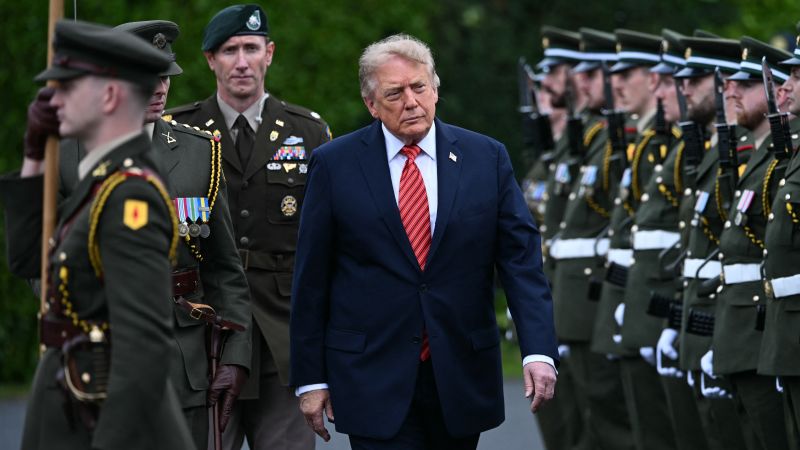
President Donald Trump said Iran was likely involved when questioned about the incident during a visit to Dublin, Ireland, on Saturday. His comments came as concern grows over threats to energy facilities, maritime traffic and Red Sea shipping lanes.
“I think they are, probably they are,” Trump told journalists.
Trump also said he had spoken with Saudi Crown Prince Mohammed bin Salman, describing him as a “good friend.” The crown prince reportedly held two calls with Trump on Thursday and pressed for US action against the Houthis, whose recent gains near the Red Sea have intensified regional alarm. Trump declined to authorize such action.
When asked whether the United States could help ensure marine traffic moves through the Strait of Hormuz amid the worsening situation, Trump offered a broad reassurance.
“Work out fine.”
The White House said the United States remained in contact with Saudi authorities and was concentrating on core national-security priorities, including freedom of navigation in the Red Sea. It also emphasized that regional partners should lead efforts to manage and resolve security challenges affecting the area.
A Pipeline of Growing Strategic Importance
The East-West Pipeline has taken on major importance since the start of the US-Iran war. It allows Saudi Arabia to send oil across the kingdom to Yanbu, a port on the Red Sea, instead of relying entirely on tanker routes through the Persian Gulf.
Roughly 5 million barrels of oil a day that would ordinarily have been loaded onto tankers waiting in the Persian Gulf have been redirected through this pipeline. With Iran effectively closing the Strait of Hormuz, the overland link provides Saudi Arabia with an alternative outlet for exports.
That role makes the pipeline a particularly sensitive target. Any prolonged disruption could narrow Saudi Arabia’s ability to move crude to international markets and deepen uncertainty in energy trading. The attack therefore carries significance beyond the physical damage and injuries reported on Thursday: it highlights how the conflict is placing pressure on both production infrastructure and the transport corridors needed to deliver oil.
Saudi authorities said the attacks caused “a number of injuries,” but did not provide further details about those harmed or the scale of the damage. The ministry said it was taking steps to secure the pipeline and review its condition before determining next steps.
Iraq Orders Investigation
Iraq’s government condemned the strike and announced an urgent investigation into those responsible. Officials said Iraqi territory and airspace would not be permitted for use in attacks of this kind.
On Saturday, Iraqi authorities also said several borders had been closed as a precaution. The measures reflect fears that the conflict could spread further through neighboring states and create additional security risks across the region.
The allegation that drones came from Iraq places renewed attention on armed groups operating there, including factions with ties to Iran. Still, the denial from the Islamic Resistance in Iraq means the identity of those behind the attack remains unresolved.
Pressure Mounts Along the Red Sea
The pipeline strike comes alongside advances by the Houthis in Yemen, including the seizure of a strategically important island and a Red Sea port. Saudi Arabia has long supported Yemen’s internationally recognized government in its conflict with the Iran-backed Houthi movement.
Those developments create overlapping challenges for Riyadh. The kingdom must protect oil infrastructure inside its borders while also preserving its ability to export through the Red Sea, a route that has become more valuable because of the disruption at Hormuz.
For energy markets, the situation underscores the vulnerability of major supply routes. The Persian Gulf, the Strait of Hormuz, Saudi pipeline networks and Red Sea ports are all central links in the movement of crude oil. Disruption at any one point can force exporters to seek alternatives; pressure on several links at once leaves fewer options.
Saudi Arabia has not indicated when the East-West Pipeline might reopen. The immediate focus remains on assessing its safety, securing the route and determining who launched the drones. As fighting and maritime disruption continue, the attack has sharpened concerns that Saudi oil exports may face increasingly serious threats.
Related Reading
Frequently Asked Questions
What is Trump says Iran likely responsible for attack?
Trump says Iran likely responsible for attack is the main topic of this guide. The article explains the context, practical details, and next steps readers should understand.
Why does Trump says Iran likely responsible for attack matter?
Trump says Iran likely responsible for attack matters because readers are looking for a useful answer, not just a short summary. Good content should match search intent and help them decide what to do next.