
Nepal’s Flood Survivors Found Alive After Ten Days of Despair
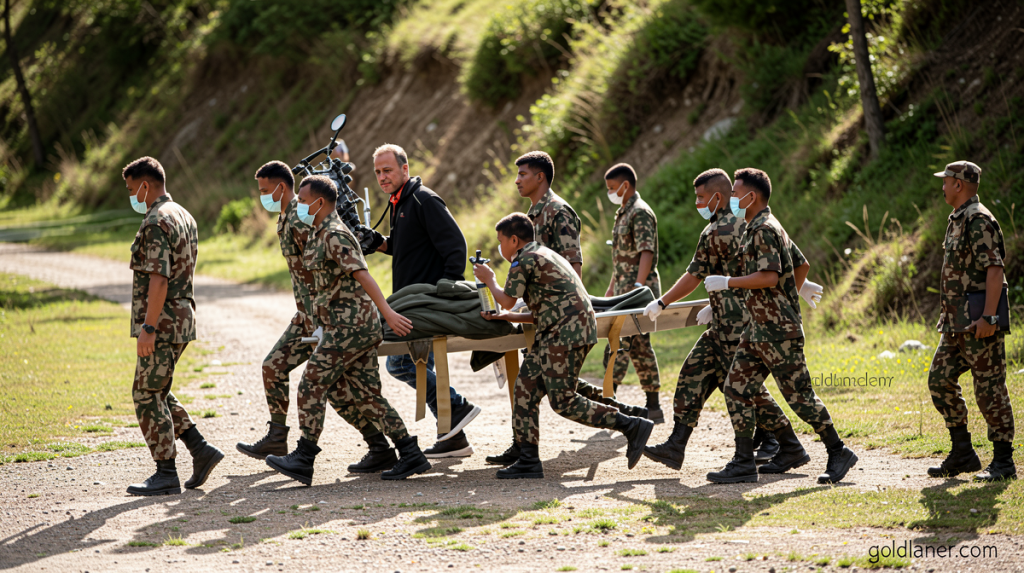
Goldlaner.com – Two people pulled from the wreckage of Nepal’s worst natural disaster in decades on Saturday gave a shattered region a fragile thread of hope. Ten days after a wall of glacial ice, torrential water, and debris obliterated riverside settlements along the Trishuli River, rescuers extracted a Chinese national trapped inside a hydropower tunnel complex and a 60-year-old Nepali woman stranded on the upper floor of a four-story structure in the ruined community of Betrawati.
The woman, identified as Chandika Shrestha, had been presumed dead by her own family. A local official confirmed that relatives had already performed ceremonial last rites and were arranging a funeral before her discovery downriver. The episode underscores the agonizing uncertainty that now grips thousands of households across Nepal and neighboring China, where families remain suspended between grief and hope, unable to confirm whether their missing kin are alive or buried beneath the rubble.
A Man Who Shouted Into the Dark
Lu Haitao, the Chinese worker rescued from the hydropower tunnels, described days of desperate attempts to signal rescue crews. Hundreds of fellow workers remain unaccounted for in those same underground passages.
“Whenever I saw the lights, I shouted, ‘Hey!’ Really loudly, really loudly,” Lu recounted in an interview with Chinese state broadcaster CCTV. “Maybe they didn’t hear me. When they came to rescue me today, even when their (lights) were shining right in front of me, I couldn’t believe it.”
Two additional workers were pulled to safety on Friday from a separate hydropower facility after rescuers labored around the clock through treacherous terrain. Yet even as these extraordinary salvos unfolded, two more bodies were recovered from the very site where Lu had been held, a grim reminder that every rescue is shadowed by loss.
The Cascade That Destroyed Everything
The disaster was triggered when a massive slab of ice broke free from a retreating glacier high in the Himalayan watershed. The falling ice mass detonated a landslide that dammed and then catastrophically breached a river channel, sending a wall of water, rock, and mud racing down the Trishuli valley within minutes. Entire communities along the river were erased before residents could react.
Authorities have confirmed at least 1,362 deaths. Roughly 900 of those still missing are hydropower workers who had been on shift at facilities strung along the river when the floodwave struck. The concentration of casualties in those tunnels has made them the primary focus of international rescue operations, with specialist teams from India and China assisting Nepali forces in round-the-clock extraction efforts.
Families in Limbo
Krishna Poudel pinned a photograph of his younger brother Ishwor, a 26-year-old hydropower technician, to a board already crowded with dozens of similar posters marking those lost eight days earlier. He still has no word of his brother’s fate.
“They said they could hear the voices of about 200-300 people shouting from inside,” Poudel relayed to reporters, recounting what survivors who escaped the tunnels told him.
That testimony has become a lifeline of hope for families across the affected districts, even as the passage of time makes each additional day of silence more devastating.
Scale of Destruction and Humanitarian Need
The physical toll extends far beyond the tunnels. The Nepali Foreign Ministry stated Saturday that more than 7,500 homes across the country were damaged and approximately 55 kilometers (34 miles) of roadway were destroyed. Access to affected areas remains severely constrained, complicating both rescue and relief operations. The Nepali Army reported working to reconstruct temporary bridges across the swollen river and to reach populations cut off by the flooding.
A United Nations assessment estimates that around 35,000 people require safe temporary shelter, while another 43,000 face immediate food insecurity. The figures place the crisis among the largest humanitarian emergencies Nepal has confronted in recent years, straining a government already managing reconstruction after years of earthquakes and monsoon disasters.
Why This Flood Was Different
Glacial lake outburst events have grown more frequent across the Himalaya as warming temperatures accelerate ice melt and destabilize moraine-dammed lakes. The Trishuli incident illustrates how a single ice calving event can cascade into a valley-filling flood within minutes, leaving virtually no warning time for downstream populations. Hydropower infrastructure, built to harness the region’s steep gradients, now sits directly in the path of such events, concentrating both economic value and human risk along narrow river corridors.
For the families still waiting, the calculus is simple and merciless: every hour that passes without news tilts the balance further toward the worst outcome. The two Saturday rescues are miracles measured against the scale of what was lost, and they do not diminish the thousands of unanswered questions that remain.
Related Reading
Frequently Asked Questions
What is Two survivors miraculously rescued 10 days?
Two survivors miraculously rescued 10 days is the main topic of this guide. The article explains the context, practical details, and next steps readers should understand.
Why does Two survivors miraculously rescued 10 days matter?
Two survivors miraculously rescued 10 days matters because readers are looking for a useful answer, not just a short summary. Good content should match search intent and help them decide what to do next.