
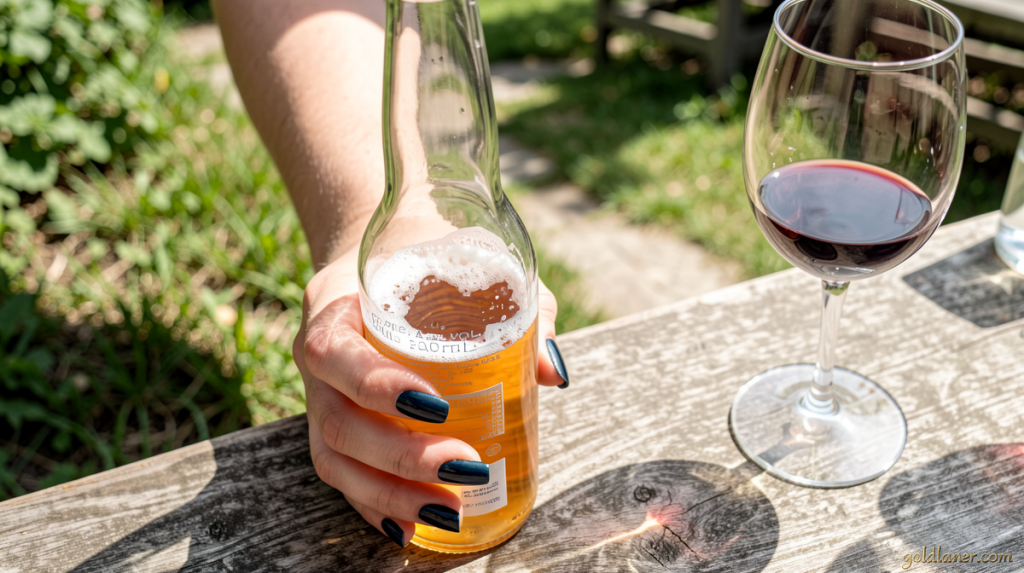
A Single Daily Drink May Be Costing American Lives: New Research Quantifies Alcohol’s Hidden Cancer Toll
Goldlaner.com – The assumption that a modest nightly pour of wine or a small glass of whiskey is a harmless ritual has been dealt a serious blow by fresh epidemiological evidence. A large-scale analysis spanning more than three decades of American mortality data reveals that alcohol’s contribution to cancer deaths has quietly doubled among adults aged 20 and older since 1990. The findings, published in The Lancet Regional Health – Americas, draw on the Global Burden of Disease Study — an enormous international effort tracking health outcomes across more than 200 countries and territories — and they paint a picture far more alarming than many Americans realize.
The Scale of the Problem
Between 1990 and 2023, the annual number of cancer deaths in the United States linked to alcohol consumption more than doubled, climbing from 11,361 to 23,126. Men and adults aged 55 and older bore the heaviest burden. Among older males specifically, the alcohol-related cancer mortality rate surged by nearly 24 percent over that 33-year window. The affected malignancies span a wide anatomical range: breast, prostate, colon, rectum, stomach, pancreatic, and liver cancers, along with cancers of the head and neck.
Dr. Chinmay Jani, chief clinical fellow in hematology and oncology at the Sylvester Comprehensive Cancer Center of the University of Miami and first author of the study, emphasized the proportional shift even as overall cancer mortality has trended downward.
“While it’s true that overall cancer mortality has declined, we found the percentage of cancer deaths proportionally attributable to alcohol doubled in people 20 and older over the last 33 years.”
Who Is Most at Risk
The data break down sharply by sex and age bracket. For men, liver cancer deaths showed the strongest association with drinking, followed by esophageal and colorectal cancers. Among women aged 55 and older, breast cancer topped the list of alcohol-attributable killers, with liver and colorectal cancers close behind.
Among younger adults — those between 20 and 54 — the pattern shifted. Colorectal cancer emerged as the leading cause of alcohol-attributable cancer mortality in men and the second-leading cause in women, overtaking liver cancer in both groups. For women of that younger cohort, the primary driver was alcohol-related breast cancer.
“Notably, among adults aged 20 to 54, colorectal cancer was the leading cause of alcohol-attributable cancer mortality in men and the second leading cause in women, surpassing liver cancer in both groups,” Jani explained. “In women, the leading cause was alcohol-related breast cancer.”
Jani also noted a dose-sensitivity gradient: women of any age, and men younger than 55, require less alcohol to see their cancer risk rise compared with men over 55.
How Little Alcohol Is Enough
The threshold that elevates risk is lower than many consumers assume. Roughly one standard drink per day, consumed consistently, is sufficient to move the needle. In American terms, a standard drink equals 12 ounces of regular beer, 5 ounces of wine, or 1.5 ounces of 80-proof distilled spirits.
For decades, federal dietary guidance advised Americans to cap intake at two standard drinks daily for men and one for women. In January of this year, however, the Trump administration dismantled those numeric ceilings, replacing them with a vaguer recommendation that people should “consume less alcohol for better overall health.” The shift leaves consumers without a concrete benchmark at precisely the moment new data underscore how even modest, habitual intake carries measurable mortality risk.
The Biology Behind the Link
The National Cancer Institute outlines several biological pathways through which alcohol fuels carcinogenesis. Ethanol — the active compound in every alcoholic beverage — is metabolized by the liver into acetaldehyde, which the NCI classifies as a “probable human carcinogen.” Although the liver subsequently converts acetaldehyde into harmless acetate, that conversion is imperfect. Before the final step completes, acetaldehyde can inflict direct DNA damage and obstruct the cell’s own repair machinery.
Alcohol also perturbs hormonal balance, particularly estrogen levels, which helps explain the well-documented drinking–breast cancer connection. Beyond hormonal effects, chronic consumption amplifies oxidative stress, injuring DNA, proteins, and cellular function while sustaining low-grade inflammation. In the oral and pharyngeal mucosa, alcohol weakens epithelial cells, rendering them more vulnerable to carcinogens — a vulnerability compounded dramatically by cigarette smoking, itself a major acetaldehyde source.
Nutrient metabolism suffers as well. Alcohol interferes with the breakdown and absorption of vitamins A, C, D, and E, along with folates within the vitamin B complex — micronutrients long associated with reduced cancer susceptibility.
Expert Context and Broader Implications
Dr. Andrew Freeman, a cardiologist and director of cardiovascular prevention and wellness at National Jewish Health in Denver, who was not involved in the new analysis, framed the findings within a wider scientific consensus.
“What we used to think about alcohol continues to be eroded as modern science has shown us that there is no safe amount of alcohol consumption,” Freeman said. “This study in concert with several others suggests that the risks associated with consumption need much wider recognition.”
The cultural legacy of the evening cocktail — once treated as a benign social norm — is increasingly at odds with the accumulating evidence base. When paired with the recent removal of explicit federal drinking limits, the study’s findings raise a practical question for public-health communicators: how will Americans interpret “consume less” when the science suggests that even a single daily unit carries a quantifiable mortality cost across at least nine distinct cancer types?
For clinicians, the implications are immediate. Screening conversations with patients who report daily alcohol use should now incorporate cancer-risk counseling alongside the traditional cardiovascular and hepatic warnings. For policymakers, the absence of a numeric ceiling in current guidance may leave the public without a clear behavioral target at a time when the data demand one.
The study’s authors underscore that the proportional increase in alcohol-attributable cancer deaths occurred even as total cancer mortality fell — meaning the alcohol signal is growing louder against a quieter background, not merely riding a rising tide. That distinction matters: it implies that interventions targeting alcohol consumption could yield measurable reductions in cancer deaths independent of other public-health gains already achieved.
Related Reading
Frequently Asked Questions
What is Just one drink a day may increase?
Just one drink a day may increase is the main topic of this guide. The article explains the context, practical details, and next steps readers should understand.
Why does Just one drink a day may increase matter?
Just one drink a day may increase matters because readers are looking for a useful answer, not just a short summary. Good content should match search intent and help them decide what to do next.