
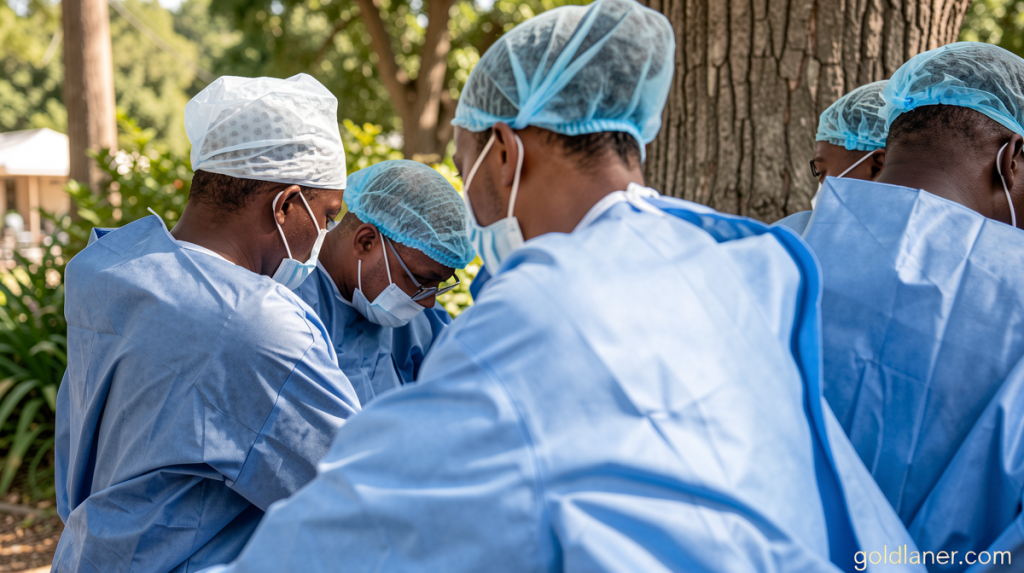
Colorectal Cancer Is Surging Across Nigeria, and Late Diagnosis Is Costing Lives
Goldlaner.com – Colorectal cancer now claims more lives worldwide than any malignancy except lung cancer, and its incidence continues to climb year after year. A particularly alarming trend is the sharp uptick among younger adults. While the disease has long been more prevalent in North America and Western Europe than in Africa or South Asia, that gap is narrowing rapidly. In Nigeria, the consequences of this shift are already visible in hospital wards where patients arrive with advanced, often metastatic disease — and where the odds of surviving five years after diagnosis stand at roughly one in five, compared with two in three in the United States or Western Europe.
Three Patients, Three Missed Diagnoses
In and around Ile-Ife, a city in southwestern Nigeria, three individuals spent months or years enduring symptoms that were repeatedly misattributed. A small-business owner was told he had appendicitis. A university lecturer and a government clerk, both battling persistent stomach pain for over a year, were each diagnosed with ulcers. In every instance, the underlying condition was colorectal cancer. By the time the true diagnosis was confirmed, all three required major surgical intervention followed by approximately a year of intensive, debilitating chemotherapy.
The pattern is not unusual. Dr. Olusegun Alatise, a professor of surgery at the Obafemi Awolowo University (OAU) teaching hospital in Ile-Ife, explains that most patients presenting to his institution arrive only after the disease has already disseminated. Symptoms such as rectal bleeding go untreated for extended periods, dismissed or managed with unrelated medications.
“A majority only come to the teaching hospital for treatment when the disease has spread. They have symptoms that were neglected. They’d be having rectal bleeding for a year, but everybody would be treating them with other medicines.”
From “Rare” to Weekly Cases
When Alatise entered surgical training in the early 2000s, the prevailing teaching held that colorectal cancer was exceedingly uncommon in sub-Saharan Africa. Clinical reality told a different story almost immediately.
“It was supposed to be very rare, but we [the teaching hospital] were seeing a case every week. We are talking about an exponential increase in the incidence of colorectal cancer.”
The OAU hospital, with its aging infrastructure and visibly worn examination rooms, bears little resemblance to the gleaming cancer centers of North America or Europe. Yet it has become a node in a growing network of research and training partnerships that extend well beyond Nigeria’s borders.
A Partnership Forged in New York
The turning point came in 2009, when Alatise was accepted into a program designed to train international physicians in modernizing cancer care back home. The program was housed at Memorial Sloan Kettering Cancer Center in New York City, and Alatise was the first African surgeon to apply. During his months in New York, he acquired new surgical techniques and formed a close professional bond with Dr. Peter Kingham, an American surgeon whose prior postings included Malawi, South Africa, Tanzania, and Sierra Leone. Kingham was completing his own surgical oncology fellowship at the time.
In 2011, after Alatise returned to Nigeria, he invited Kingham for a multi-week visit — the beginning of what became an annual tradition. By then, Kingham had helped establish the Global Cancer Disparities Initiative at Memorial Sloan Kettering. In 2013, the two surgeons co-founded the African Research Group for Oncology (ARGO), an organization dedicated to strengthening training programs and expanding Africa-based research capacity.
“The goal is to do clinically meaningful research. At MSK, we do a ton of esoteric research, most of which is important, but it’s also a luxury. [In Nigeria] we don’t have the same luxury. Everything we do, we have to ask, ‘Can this really change the course of what happens to a patient?'”
ARGO has since grown to include more than two dozen sites across Nigeria, employs over 60 staff members, and enrolls nearly 10,000 patients in various research programs. At least four grants from the U.S. National Institutes of Health have underwritten ARGO’s work, with colorectal cancer as a central focus area.
The Dietary Shift Behind the Surge
Genetics, tobacco use, and alcohol consumption are established risk factors for colorectal cancer. But Kingham identifies changing dietary patterns as the single largest driver of the global increase. Processed foods and Western-style eating habits are strongly correlated with the disease.
“A Western diet is strongly associated with colorectal cancer, and so are processed foods. That’s the curse of development.”
Alatise observes that the typical Nigerian diet has transformed dramatically within recent years. Even individuals from rural communities now consume predominantly processed foods, which carry a social prestige associated with affluence. Conversely, high-fiber diets and traditional staples are increasingly stigmatized as markers of poverty.
“Even people that come from a rural community are mostly eating processed food, because processed food is regarded as the rich man’s food, whereas a high-fiber diet and traditional foods are seen as a poor man’s food.”
The implication for public health is direct: as urbanization accelerates and food systems across West Africa restructure, the window for early detection and prevention narrows. Without sustained investment in screening programs, physician training, and community education about warning signs — rectal bleeding, unexplained weight loss, persistent changes in bowel habits — the survival gap between Nigeria and high-income nations is likely to widen rather than close. The work being done through ARGO and allied institutions represents one of the few structured responses to a problem that, for decades, was simply not expected to exist on the continent.
Related Reading
Frequently Asked Questions
What is Don t ignore the warning signs?
Don t ignore the warning signs is the main topic of this guide. The article explains the context, practical details, and next steps readers should understand.
Why does Don t ignore the warning signs matter?
Don t ignore the warning signs matters because readers are looking for a useful answer, not just a short summary. Good content should match search intent and help them decide what to do next.