
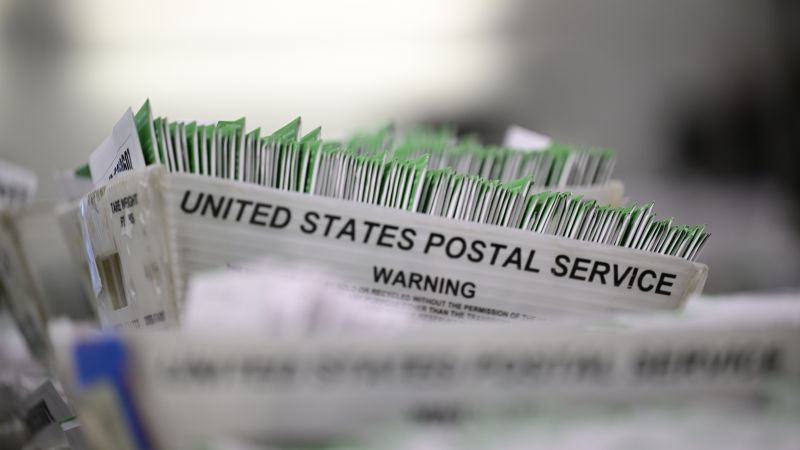
USPS Whistleblower Describes New Ballot Plans
Goldlaner.com – A whistleblower report released Tuesday by Connecticut Senator Richard Blumenthal reveals that the United States Postal Service has been building a mail-ballot verification platform largely out of public view. The USPS whistleblower describes new plans in which states must upload voter lists to a federal portal before ballots are delivered, and the unnamed source characterizes the internal development process as chaotic, under-specified, and rushed to meet a September 1 go-live date.
The mandate traces back to a March executive order signed by President Donald Trump, which assigned USPS an unprecedented screening role over state mail-in voting programs. Under the scheme, agency scanners would read envelope data and compare it against a federal database; any mismatch would trigger a delivery hold. For millions of Americans who cast ballots by mail, that single checkpoint could decide whether a ballot arrives at a counting facility before the deadline.
What the Report Details
According to the whistleblower’s account of new plans, requirements were never firmly documented in writing. IT staff received system specifications that shifted repeatedly, and leadership reportedly waved off concerns about the ambiguity, insisting the scope was simple and that formalizing documents was a luxury the timeline did not allow. Testing proceeded piecemeal as individual modules became available rather than through a structured end-to-end validation cycle.
The compressed schedule sharpened the risk. Internal IT teams were allotted less than one week to test the completed system before launch. North Carolina began mailing ballots the same week the report surfaced, with additional states slated to follow later in the month. Whether the portal was genuinely ready for the stated Tuesday target remained unclear at the time of publication.
“USPS leadership, it appears, has discarded all best practices as they speed the project to be ready for a September 1 implementation — raising questions about whether catastrophic failure would be a feature rather than a bug.”
That language appears in the report itself, which Blumenthal’s office framed as evidence that procedures central to the ballot-verification mandate had been concealed from both voters and election officials. The whistleblower describes new plans that compound an already complicated and risky architecture, according to the senator’s public summary of the document.
Courts, DOJ, and State Pushback
The legal footing beneath the mandate is unsettled. Multiple courts have weighed whether compelling states to hand over voter lists to a federal postal agency is lawful. Last week a judge issued a freeze barring USPS from conditioning ballot delivery on states’ use of the system, while permitting the agency to offer the portal voluntarily. The Department of Justice has appealed, keeping the question alive at the appellate level.
Election officials have voiced alarm at being asked to operate a system that has not undergone extensive independent testing or formal training. The concern extends beyond the technical: if a scanner misreads an envelope or the database holds stale records, ballots could be held or rejected en masse, effectively disenfranchising voters in a single cycle.
Nevada Secretary of State Cisco Aguilar, a Democrat, addressed the episode on CNN’s “Inside Politics” program Tuesday, framing it as part of a broader pattern of federal encroachment on state-run elections.
“The Postal Service used to be a great partner of ours in helping us ensure that Americans had a voice in our electoral process, but I’m also not surprised to hear what they’re doing. This president is tearing a trusted organization that was loved by Americans apart.”
Aguilar stressed the constitutional division of authority: states administer elections, not the federal government and not a postal agency. He pledged to hold USPS accountable for what he described as overreach.
In a statement issued later Tuesday, a Postal Service spokesperson said the agency was “carefully reviewing” the concerns raised by the whistleblower and by Blumenthal.
Frequently Asked Questions
What exactly does the new USPS ballot-verification system require? States would upload lists of mail-in voters to a federal portal. USPS scanners would then compare envelope data against that database before releasing delivery. A mismatch triggers a hold until resolved.
When was the system supposed to launch? The stated target was September 1. North Carolina began mailing ballots the week the whistleblower report was made public, and other states were scheduled to follow later that month.
Is the system currently operational? A federal judge issued a freeze last week preventing USPS from making ballot delivery conditional on states’ use of the portal, though voluntary use remains permitted. The Department of Justice has appealed the ruling.
Who released the whistleblower report? Connecticut Senator Richard Blumenthal made the document public on Tuesday. The source is unnamed, and allegations were compiled by the whistleblowers’ legal team.