Trump calls for NBC’s Kristen Welker to face ‘rebuke or punishment’ from the FCC

Trump Calls for NBC’s Kristen Welker Punishment
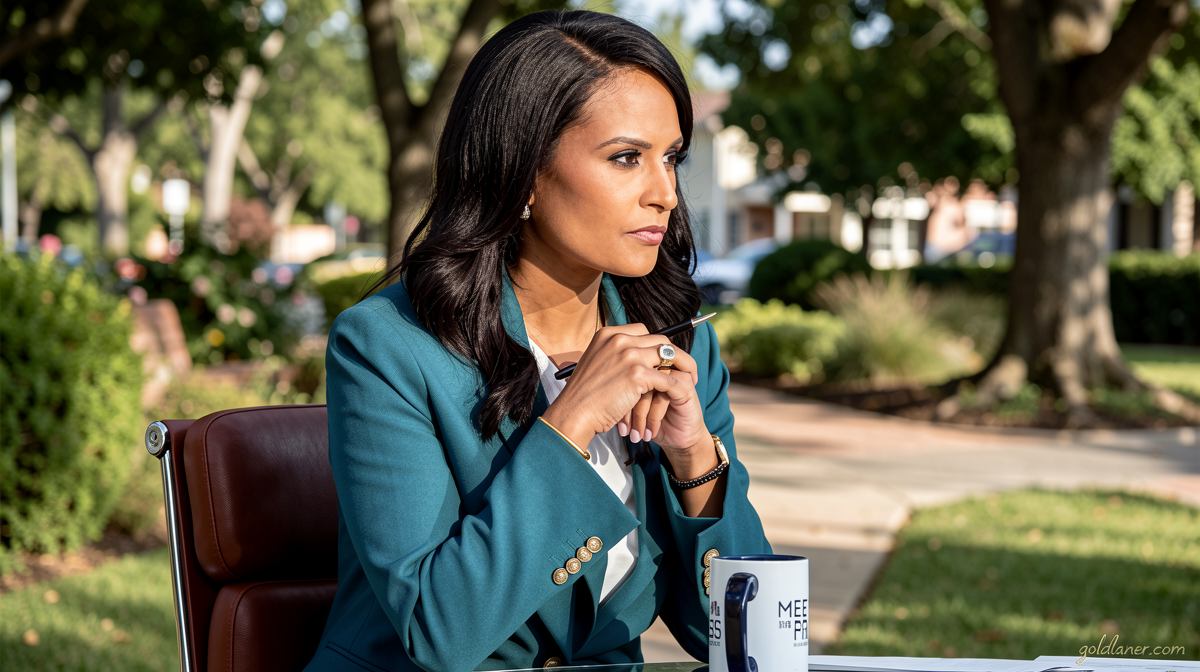
Goldlaner.com – President Donald Trump issued a pointed demand on Sunday that the Federal Communications Commission take disciplinary action against NBC’s Kristen Welker, the moderator of “Meet the Press,” after she characterized his recent endorsement record as yielding “mixed results.” In a lengthy social-media post, the president urged that Welker be “reported to the FCC for rebuke or punishment,” marking the most explicit attempt yet by a sitting president to direct a federal regulator toward a named journalist over a single on-air remark.
A second post published the same day amplified the regulatory angle. Writing entirely in capitals about what he termed “fake polls,” Trump declared that “something must be done about it” and appended the exclamation, “FCC to the rescue!” Read together, the two messages framed the commission not as an independent spectrum and broadcast-standards body but as an instrument of presidential grievance.
The Remark and the Retaliation
Welker made the endorsement comment while promoting an upcoming episode of her Sunday program on NBC’s local Washington, D.C. station. Her phrasing echoed reporting that had already circulated across multiple outlets earlier in the month, including accounts noting that six Trump-backed candidates for House seats and governor’s races had lost their primary contests. Other major news organizations had similarly described the president’s recent endorsement track record as uneven.
Trump’s reply dissected the characterization point by point. He cited the Senate victories of Darline Graham and Mike Mazzei, asserting a 100 percent success rate for Senate endorsements and a 98 percent rate for House endorsements “recently and over the longterm.” The post then pivoted to a rhetorical challenge aimed at the broadcast establishment:
“How can anyone be allowed to say this, working for freely given Public Airwaves?”
The message closed with a direct appeal to the commission’s leadership:
“The Press is a Disgrace to our Nation, and I hope that Chairman Brendan Carr, and the fine people of his Commission, will take this Threat to our Country very seriously.”
Legal Limits and Commission Response
The FCC’s own public-facing materials state plainly that the agency “cannot prevent the broadcast of any particular point of view.” Under the Communications Act, its jurisdiction over broadcast licensees centers on technical standards, spectrum allocation, and narrow content categories such as over-the-air obscenity and indecency. No statutory mechanism exists for filing a complaint against a news report or imposing a sanction on a journalist for an editorial judgment. In practical terms, the notion of “punishment” for a moderator’s on-air characterization of election data has no historical precedent in FCC enforcement.
Chairman Brendan Carr, a Trump appointee and close political ally, has nonetheless signaled repeated willingness to act on presidential complaints. In March he issued a public threat to broadcasters over their coverage of the Iran war, days after the president voiced similar grievances on his own platform. In April he initiated an unusual challenge to ABC’s local station licenses just one day after Trump publicly called for comedian Jimmy Kimmel’s dismissal from his late-night show, defending the move by pointing to a separate probe into Disney’s diversity, equity, and inclusion practices. Disney, ABC’s parent company, filed a First Amendment lawsuit against the commission earlier this month in response. Carr also maintains an open investigation into NBC’s parent company, Comcast, which he has framed as examining what he calls “invidious forms of DEI discrimination.” Former FCC officials from both parties have criticized the chair for what they describe as an effort to weaponize the agency and chill protected speech.
Anna Gomez, the sole Democrat on the five-member commission, responded to the Sunday posts by stating that “the FCC has no authority to punish journalists this administration doesn’t like.” She added:
“These threats to press freedom are dangerous. They undermine the foundation of our democracy, and they have no place in it.”
An NBC News spokesperson issued a brief statement defending the moderator, affirming that Welker’s characterization was grounded in publicly reported election results and that the network would continue to hold its programming to its editorial standards.
Frequently Asked Questions
Can the FCC actually punish a journalist for an on-air comment? Under current law, no. The Communications Act gives the commission authority over technical broadcast standards, spectrum use, and narrow content categories like over-the-air indecency. There is no statutory pathway to sanction a news moderator for an editorial characterization of election data.
What did Kristen Welker actually say? While promoting an upcoming episode of “Meet the Press” on NBC’s local Washington, D.C. station, Welker described the president’s recent endorsement record as producing “mixed results,” a phrasing consistent with reporting that six Trump-backed candidates had lost primary contests that month.
What is the FCC’s current posture toward broadcast networks? Chairman Brendan Carr has opened or advanced investigations touching both Disney/ABC and Comcast/NBC, citing DEI-related concerns. Disney filed a First Amendment suit against the commission earlier this month. Former commissioners from both parties have publicly questioned whether the agency is being used to chill protected speech.