
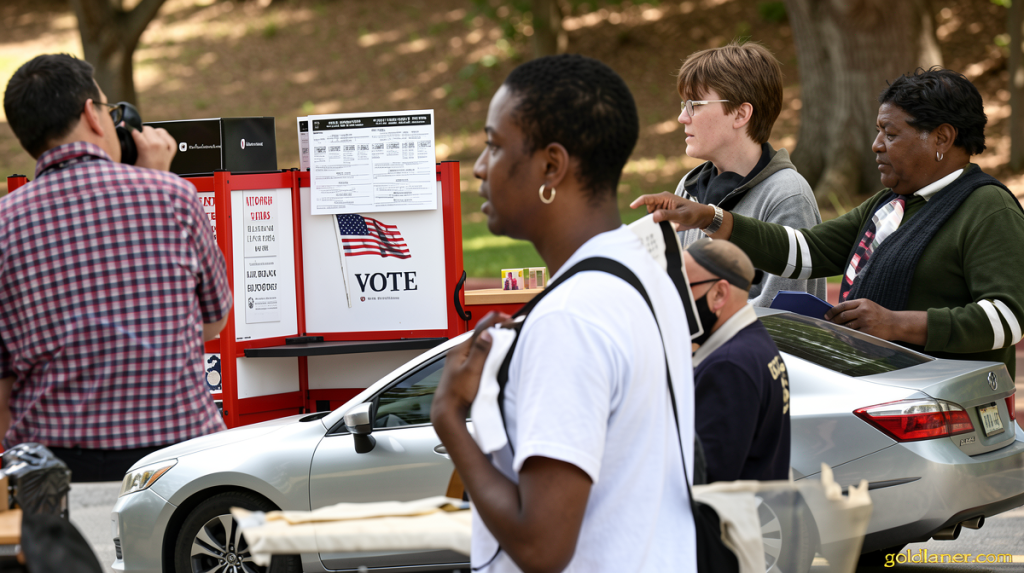
As November 2026 Approaches, Speculation Grows Over What Trump Might Do to the Midterms
Goldlaner.com – The question haunting American voters, election officials, and lawyers alike is no longer whether the November midterms will be contested fairly on paper, but whether the president himself might intervene in ways no one has seen before. President Donald Trump has already spent years insisting that elections he personally won were tainted by widespread fraud, and he spent months after the 2020 presidential contest attempting to reverse a result he has never publicly acknowledged. Independent investigations and court rulings found no evidence supporting those claims. Yet the pattern of behavior has left many wondering what, if anything, might be attempted this time around.
A Menu of Unprecedented Interventions
In recent months, Trump has been asked directly about the most extreme measures he could deploy in or after the November vote. His answers have been deliberately vague — neither confirming nor ruling out actions that would represent a dramatic break from every prior midterm cycle. Meanwhile, senior aides in his orbit have continued to voice unsubstantiated worries about electronic voting machines and about noncitizens casting ballots, feeding a narrative that has no documentary backing.
The specific scenarios circulating among allies, commentators, and speculators include:
Seizing ballot boxes or voting machines shortly after polls close, ostensibly to protect them from foreign interference. Declaring a national election emergency, a move that would grant the executive sweeping, previously unused authority over how states administer their own votes. Deploying uniformed troops or Immigration and Customs Enforcement agents to polling places on Election Day itself.
When Trump delivered a July address to the nation on the theme of election integrity, he made no commitment to any of these steps. Still, the speculation has not faded. If anything, it has intensified on the political left, where organizers are working to maximize turnout in November and view any hint of executive overreach as both a threat and a mobilizing story.
“Trump is throwing stuff out there. People are biting on it, and it makes the country as a whole more nervous, and is a self-perpetuating cycle,” said Ben Ginsberg, a longtime Republican election lawyer.
Ginsberg added that the anxiety, while partly manufactured, still demands a practical response from those who run the vote. He pointed to January 6, 2021, as proof that the president possesses what he called “a singular ability for asymmetrical warfare” once he decides to act outside conventional norms.
“If you’re an election official, you have to be preparing,” Ginsberg said. “Because the rhetoric is there.”
He cautioned, however, that preparation should not be confused with capitulation. In his view, the very act of stoking dread may be the objective.
“The creation of a climate of fear is maybe a goal in and of itself.”
The Executive-Order Gambit
The notion of a presidential emergency declaration tied to elections is not new. Trump floated the concept during his first term but never acted on it. What has changed is the level of organized lobbying behind the idea. As the Washington Post first reported, supporters have been circulating a draft executive order, written last spring, that would declare a national emergency specifically to vest the president with new federal powers over state-run elections. The draft’s stated justification is alleged meddling by China. US intelligence assessments, however, have indicated that Iran and Russia have been the more active foreign actors attempting to influence American elections.
Trump has never signed that order. In February, when a reporter pressed him on the push by election deniers for him to declare such an emergency and seize broad, unprecedented control over state election administration, he appeared genuinely surprised and said he knew nothing about it. This month, the idea was laid out for him again, this time by conservative commentator Wayne Root. Trump neither rejected the concept nor embraced it.
“Let me just say that stranger things have happened, OK? I’ll leave it at that,” Trump said.
Podcaster and former Trump aide Steve Bannon has been among the most vocal advocates for a near-term emergency declaration, arguing it would unlock the legal authority needed to dispatch federal agents to polling places or to take custody of ballots and machines under the banner of countering supposed Chinese interference.
The Mail-In Order and Its Legal Aftermath
Separately from the emergency-declaration question, Trump did sign a different executive action in March. That order sought to impose new restrictions on mail-in voting and to direct the United States Postal Service to act against the use of mail-in ballots. Multiple lawsuits have since been filed challenging the order, and legal analysts consider it unlikely the directive will be implemented before November. Its existence, nonetheless, signals that the administration views the mechanics of ballot delivery as a lever it believes it can pull.
The Noncitizen-Voting Argument
The most frequently cited rationale for placing federal agents at polling stations is the fear that undocumented immigrants might cast ballots. Federal law already makes it illegal for noncitizens to vote or to register to vote. Every state maintains procedures ensuring that each ballot cast corresponds to a verified voter registration, and provisional ballots are subject to post-election verification. The argument, in other words, rests on a problem that existing statutes and administrative safeguards already address.
One concrete example of the idea moving from rhetoric to campaign promise: a Republican candidate for governor in Maine has publicly committed to requesting ICE agents at polling stations in his state should he win the race.
The Opposition Stance
Norm Eisen, cofounder of Democracy Defenders Action, a group that has repeatedly litigated against the Trump administration on a range of issues, was blunt about what he expects if an emergency declaration is attempted in the coming weeks. He noted that American elections have been conducted during world wars and a global pandemic without any national-security declaration, and that his organization’s lawyers are on standby.
“There’s no power to declare emergency relating to our elections to seize ballots or do anything else. Courts are going to slap it down. We’re ready to go fast,” Eisen told reporters Thursday.
For voters watching the November countdown, the practical takeaway is twofold. First, the legal and administrative architecture of American elections — state-by-state registration checks, provisional-ballot verification, court oversight — remains intact and has withstood far greater stress than anything proposed so far. Second, the president’s repeated refusal to rule out extraordinary measures, combined with aides who continue to amplify unverified claims, means that election officials across all fifty states are being urged to prepare contingency plans for scenarios that, as of now, remain speculation rather than policy.
Related Reading
Frequently Asked Questions
What is Last minute doomsday scenarios for the 2026?
Last minute doomsday scenarios for the 2026 is the main topic of this guide. The article explains the context, practical details, and next steps readers should understand.
Why does Last minute doomsday scenarios for the 2026 matter?
Last minute doomsday scenarios for the 2026 matters because readers are looking for a useful answer, not just a short summary. Good content should match search intent and help them decide what to do next.