
Maine Has Been Through a Lot: Senate Race
Goldlaner.com – With roughly thirty days now behind Troy Jackson since he clinched the Democratic ticket for Maine’s open Senate seat, his campaign has reoriented its entire strategy around one constituency: women. The rationale is straightforward. Months of intra-party upheaval — Governor Janet Mills pulling out before the primary, then insurgent candidate Graham Platner seeing his run implode after a rape allegation he contests — left the state’s female electorate rattled and unsure where to place her loyalty. Republican operatives have seized on that confusion, linking Jackson to the disorder and to Platner’s documented history of opposing abortion access.
Endorsement, Coalition, and a Mother’s Voice
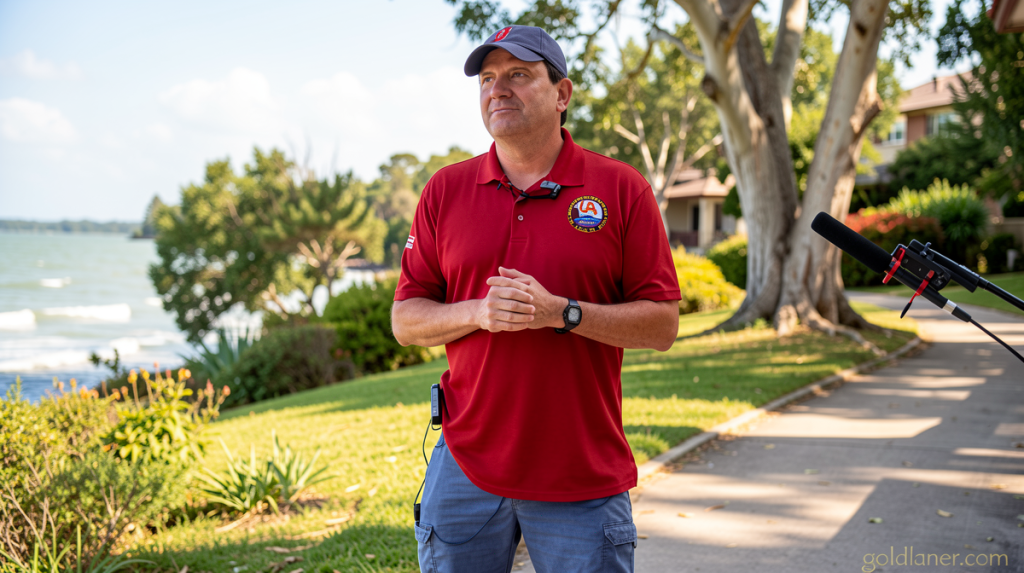
Wednesday evening brought a formal endorsement from Reproductive Freedom for All, delivered in person by its president, Mini Timmaraju. The organization had supported Mills during the primary but withheld its backing from Platner after his primary win, meaning the women’s-rights establishment sat without a candidate for weeks until Jackson’s nomination resolved the question.
“Maine has been through a lot,” Timmaraju told reporters, positioning the endorsement as a corrective to the chaos of the preceding months.
She did not shy away from Jackson’s complicated record on reproductive rights. He had once spoken loudly against abortion access before gradually moving toward support over the past decade. Timmaraju drew an explicit parallel to former President Joe Biden, whose own late evolution on the issue never derailed his path to the party’s highest office.
“We feel like Troy has more than made up for his history by being the kind of critical champion and partner to Janet Mills, a critical leader in the Dobbs response,” she added.
In parallel, the Jackson operation rolled out a “Women for Troy” coalition drawing hundreds of participants from all sixteen Maine counties. Earlier that same week, the campaign aired a television spot in which Jackson’s mother, Colleen McBreairty, speaks to her son’s character over footage of him engaging with women across his personal and professional life.
“Women should support Troy Jackson because he supports allowing women to make their own decisions about their own bodies,” Caroline Mitchell, an Oxford County coalition member, said in a campaign statement. “Women should not support Susan Collins because she has enabled the government to make that decision for women.”
Collins’s Counter-Narrative and the Dobbs Factor
Senator Susan Collins, who has long styled herself a “pro-choice” Republican, is answering in kind. Her team is working to remind Maine women of what it frames as a decades-long, policy-engaged relationship with the state’s female electorate — one built on listening even when conclusions diverge.
“Susan Collins has always been pro-choice and a champion for Maine women,” campaign spokeswoman Blake Kernen said. “But because she is a Republican, the national groups continue to twist themselves into a pretzel to support these male candidates with terrible records.”
Kernen’s remarks pointedly invoked both Jackson’s prior closeness to Platner and his earlier anti-abortion positions, attempting to keep the story anchored to Jackson’s past rather than Collins’s present record.
Democrats counter that this contest is categorically unlike Collins’s prior reelections: it is the first time she has faced voters since the Supreme Court’s 2022 Dobbs ruling dismantled the federal constitutional right to abortion. Collins cast the decisive confirmation vote four years earlier for Justice Brett Kavanaugh, who ultimately joined the Dobbs majority. For the party, that single vote converts what was once a routine incumbent-advantage race into a referendum on reproductive autonomy.
The numbers underscore the razor-thin margin. Exit polls from Collins’s last reelection showed women made up roughly three in five voters in her narrow victory over Democrat Sara Gideon, then speaker of the Maine House. A Fox News poll released earlier this month found female voters nearly evenly split: 50 percent for Jackson, 46 percent for Collins. The race will almost certainly be decided in the coming weeks by persuasion among women who have not yet committed.
Fundraising Gap and the Final Stretch
Despite the strategic urgency, Jackson enters the closing weeks from a position of financial disadvantage. He raised approximately $2 million in the two days following his capture of the nomination — a figure that, while respectable, trails the war chest Collins has accumulated over years of incumbent fundraising. The gap means the campaign must rely disproportionately on small-dollar donors and volunteer infrastructure in the final weeks, precisely the resources the “Women for Troy” coalition is designed to supply.
Frequently Asked Questions
Why is the Jackson campaign targeting women voters specifically?
Women constituted roughly three in five voters in Collins’s last narrow reelection, and current polling shows them nearly evenly divided between the two candidates. Persuading even a small additional share of undecided women could tip the race.
What is the “Women for Troy” coalition?
It is a grassroots network of hundreds of women drawn from all sixteen Maine counties, unveiled alongside the campaign’s new television advertising. Its stated purpose is to mobilize female voters in the final weeks of the general election.
How does the Dobbs decision change this race?
Collins’s confirmation vote for Justice Kavanaugh — who joined the Dobbs majority in 2022 — gives Democrats a concrete, recent policy failure to cite. It transforms the contest from a standard incumbent-advantage matchup into what the party frames as a referendum on whether women retain autonomous decision-making over their own bodies.
What is Jackson’s record on abortion?
He was once a vocal opponent of abortion access before gradually shifting toward support over roughly the last decade. Endorsers such as Mini Timmaraju acknowledge the history while arguing his subsequent partnership with Governor Mills on the Dobbs response demonstrates a genuine commitment.