
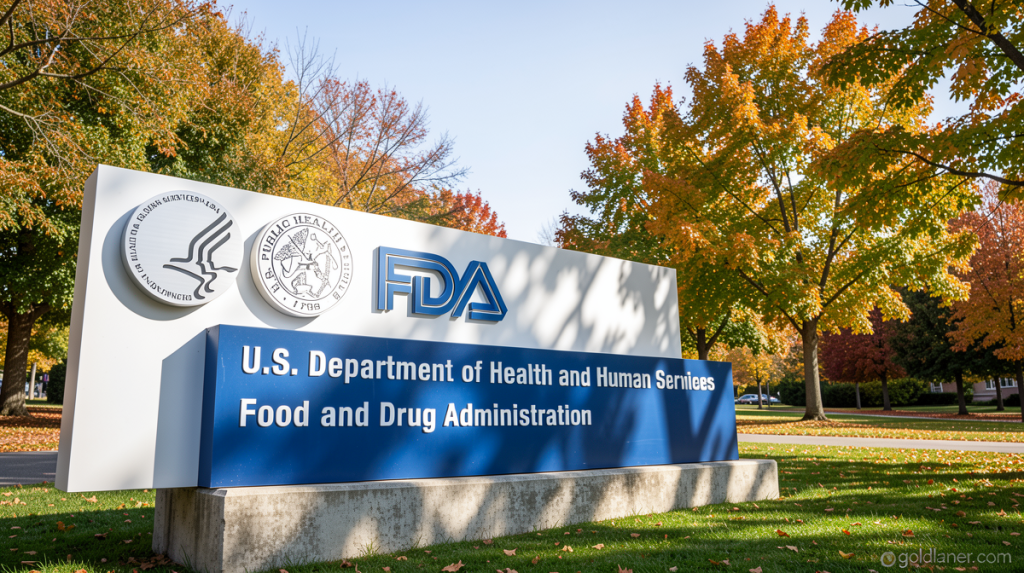
Alzheimer’s Diagnosis Moves Into the Blood Draw: FDA Clears Roche–Eli Lilly Biomarker Assay
Goldlaner.com – For decades, confirming whether a patient’s memory lapses stem from Alzheimer’s disease required either a costly brain scan or a needle through the lower spine. That era is narrowing. On Monday, the US Food and Drug Administration granted clearance to Elecsys pTau217, a blood-based biomarker assay developed jointly by Roche and Eli Lilly, designed to flag Alzheimer’s-related brain changes in adults aged 55 and older who present with cognitive decline. The decision marks a significant step toward earlier, less burdensome screening for the most common form of dementia.
What the Assay Actually Measures
Elecsys pTau217 detects a specific phosphorylated form of tau protein—pTau217—in a standard blood sample. Tau is one of the two hallmark proteins that accumulate in the brains of Alzheimer’s patients; the other is amyloid-beta. By quantifying this tau variant in serum, clinicians gain a quantitative signal about whether Alzheimer’s pathology is likely present or absent in a given individual. Roche emphasized that the test is intended to help physicians sort patients into those who are “likely or unlikely” to harbor Alzheimer’s-related brain changes, thereby guiding further workup rather than replacing it outright.
The company stressed that the assay is not a standalone diagnostic tool. Results must be interpreted in conjunction with the full clinical picture—symptom history, neurological examination, imaging, and other laboratory data—before a definitive diagnosis is rendered. In practical terms, a positive result would prompt a physician to pursue confirmatory imaging or specialist evaluation, while a negative result could spare a patient from unnecessary invasive procedures.
Why the Shift to Blood Matters
Until now, the two principal routes for detecting amyloid and tau pathology in living patients have been positron emission tomography (PET) scans and lumbar-puncture cerebrospinal fluid (CSF) analysis. PET imaging, while non-invasive, demands expensive radiotracers, specialized scanners, and often multi-hour appointments. CSF sampling, conversely, is invasive, carries procedural risks, and requires trained personnel. Neither approach is uniformly accessible, particularly in rural or underserved regions, and both carry costs that can deter patients or insurers.
A simple venous blood draw, processed on an automated analyzer already present in most clinical laboratories, collapses much of that logistical and financial friction. The FDA’s own clearance rationale centers on the test’s ability to deliver actionable biomarker information without the infrastructure demands of nuclear medicine or neuroradiology.
Availability Across the US Laboratory Network
Roche noted that Elecsys pTau217 is compatible with more than 4,500 Roche-branded laboratory analyzers already installed in American clinical labs. That existing footprint, the company said, could accelerate broad access without requiring new equipment purchases. Separately, two of the nation’s largest reference-laboratory operators—Labcorp and Quest Diagnostics—announced plans to incorporate the assay into their respective networks, potentially extending reach to thousands of additional physician offices and hospital systems.
Roche did not disclose a per-test price at the time of the announcement. Pricing will ultimately shape how frequently primary-care physicians order the assay as a first-line screen versus reserving it for specialist settings.
Regulatory Timeline and European Precedent
The US clearance follows a European approval granted in May of this year, giving the assay roughly three months of commercial experience on the continent before its American launch. That sequence allowed Roche and Eli Lilly to gather real-world performance data and refine laboratory workflows ahead of the FDA submission.
The broader diagnostic landscape is accelerating. In 2025, Fujirebio’s Lumipulse became the first blood test cleared by the FDA to assist in Alzheimer’s disease assessment. Elecsys pTau217 now joins that category, intensifying competition among diagnostic firms and pharma partners to deliver simpler, earlier tools for a disease whose window for effective intervention narrows with each passing year.
Clinical Implications and Reader Context
Alzheimer’s disease affects an estimated six million Americans, and the majority of patients receive a diagnosis only after years of progressive decline—often too late for disease-modifying therapies to alter the trajectory. Earlier identification, enabled by accessible biomarker screening, could shift treatment initiation into stages where interventions still have meaningful impact.
That said, experts caution against treating a single blood result as a verdict. Cognitive decline in adults over 55 has many causes—vascular disease, depression, medication effects, thyroid dysfunction, sleep disorders—and a biomarker signal must be weighed against the complete clinical context. The FDA’s own labeling language, echoed by Roche, positions Elecsys pTau217 as one input among several, not a binary yes/no answer.
For patients and families watching for early warning signs, the practical takeaway is straightforward: if cognitive changes prompt a visit to a physician, a blood test may now be part of the initial workup, potentially shortening the path from concern to clarity without the expense or invasiveness of prior methods. The test does not diagnose Alzheimer’s by itself, but it can tell a clinician whether to look harder, look differently, or look elsewhere.
Related Reading
Frequently Asked Questions
What is Roche Eli Lilly s Alzheimer s blood?
Roche Eli Lilly s Alzheimer s blood is the main topic of this guide. The article explains the context, practical details, and next steps readers should understand.
Why does Roche Eli Lilly s Alzheimer s blood matter?
Roche Eli Lilly s Alzheimer s blood matters because readers are looking for a useful answer, not just a short summary. Good content should match search intent and help them decide what to do next.