
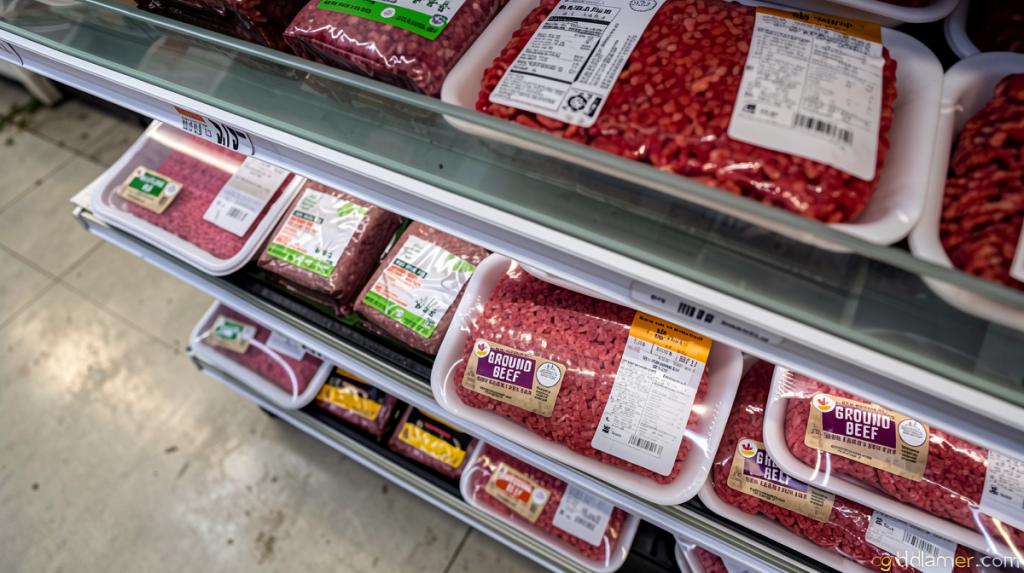
Trump Stands by Temporary Beef Tariff Pause as Ranchers and Republicans Push Back
Goldlaner.com – On Friday, President Donald Trump publicly defended his administration’s decision to suspend out-of-quota tariffs on imported ground beef for a limited window, dismissing objections from domestic cattle producers and offering no timeline for reinstating the duties. The move permits up to 300,000 metric tons of ground beef to enter the United States tariff-free over the next 90 days, a step the White House frames as a short-term remedy to a supply shortfall that has pushed retail meat prices higher than consumers expect.
The president made his case while en route to South Carolina, telling reporters that the primary objective is to bring grocery-store beef costs back within reach of ordinary households.
“We want to get the beef prices down, so we’ll get them down a little bit, and that’s what people want. That’s what the voters want, and that’s what I want.”
Trump characterized American ranchers as loyal allies rather than adversaries, insisting the industry itself recognizes the need for supplemental supply.
“They’ve done a fantastic job. But they admit that we need a little help.”
When pressed on which nations would supply the additional beef, the president declined to name them, describing only the quality standard he expects.
“I don’t want to say which countries, but there are a few countries, but they’re going to be sending in the highest quality beef, and it’s something that we need.”
Industry Groups Reject the Premise
The National Cattlemen’s Beef Association, the largest voice representing American beef producers, moved quickly to challenge the administration’s framing. In a social-media statement, the group argued that no segment of the cow-calf sector had requested expanded imports and that flooding the market with foreign product would undermine confidence in domestic pricing.
“No cow-calf producer in America is asking for increased imports. Undercutting American farmers and ranchers with inferior product from foreign competitors does nothing to create market confidence or encourage rebuilding the herd.”
The association’s position reflects a broader anxiety among ranchers: that even a temporary influx of cheaper imported beef could depress cattle prices at the farm gate, discouraging the very herd expansion that would ultimately restore domestic supply. With the U.S. cattle inventory sitting at its lowest level in decades, producers argue that the solution lies in rebuilding herds at home rather than importing product from abroad.
Republican Senators Split from the White House
Opposition was not confined to trade associations. Senator Chuck Grassley of Iowa, a longtime agricultural voice in the GOP caucus, voiced alarm on X, linking the tariff pause to the closure of a Tyson beef processing plant in Joslin, Illinois, earlier that month.
“After Tyson closure in Illinois last wk I’m concerned for the cattle markets +now Pres Trump’s decision to temporarily open up subsidized beef imports.”
Grassley added that American cattlemen should remain the priority under “America 1st policies” and urged continued progress against screwworm while expanding the domestic herd.
“USA cattlemen shld always be put 1st thru America 1st policies Need 2keep up progress fighting screwworm+ expanding domestic herd.”
Senator Tim Sheehy of Montana, another Republican, went further, saying he had counseled the president against this specific action for roughly a year. Sheehy framed the issue as one of structural market power, noting that ranchers have long contended with packer monopolies and that the tariff pause would compound their difficulties.
“I’ve advised President Trump against this course of action for a year because American ranchers have been struggling against the packer monopoly for decades, and this will further harm them – most of whom are MAGA Republicans.”
Sheehy acknowledged the president’s consumer-price motive and noted the role of screwworm in distorting supply, but warned of downstream consequences.
“But the reality is this action will make it more difficult for American ranchers to rebuild our herd and bring prices down for the American people. And most importantly, this will harm our ranching families who feed the nation.”
White House Frames the Move as Narrow and Temporary
A White House spokesperson issued a statement emphasizing continuity of support for American agriculture while justifying the tariff easing as a response to an acute, short-term supply crunch. The administration, the spokesperson said, is simultaneously working with ranchers to expand the cattle herd, which remains at a multi-decade low.
“President Trump has repeatedly affirmed his support for America’s ranchers and farmers, including in today’s announcement. While the Administration will be easing tariffs on beef imports to address a short-term supply crunch, the Administration is simultaneously working closely with ranchers to grow America’s cattle-herd size, which is currently at a multi-decade low.”
Deputy Chief of Staff Stephen Miller, responding to questions about Sheehy’s criticism, stressed that no prior administration had taken more aggressive steps to safeguard the food supply chain under USDA authority. He pointed to the screwworm outbreak in Mexico as a factor distorting regional supply and characterized the tariff pause as tightly scoped.
“No administration has been more pro-rancher than this administration taking extraordinary actions under USDA to protect and ensure the security of our food supply chain — but again, there’s been, there was an outbreak of screwworm in Mexico.”
Miller underscored that the arrangement is “a specific, temporary deal to address an acute issue,” signaling that the administration views the 90-day window as a bridge rather than a permanent trade-policy shift.
Why the Timing Matters
The beef supply crunch the administration cites stems from a confluence of factors: a cattle herd that has contracted sharply over the past several years, elevated feed costs, and the disruption caused by screwworm incursions along the southern border, which have forced quarantine measures and reduced the flow of cattle from Mexico. Retail beef prices have climbed accordingly, drawing consumer complaints that the White House says it is obligated to address. The Tyson plant closure in Illinois added another layer of processing-capacity loss, tightening the market further. Within that context, the administration argues that a brief, limited import window prevents price spikes from becoming entrenched, while senators and industry groups counter that the signal sent to producers—namely, that foreign beef will undercut domestic prices—could slow the very herd rebuilding the country needs.
Related Reading
Frequently Asked Questions
What is Trump defends pause on beef tariffs?
Trump defends pause on beef tariffs is the main topic of this guide. The article explains the context, practical details, and next steps readers should understand.
Why does Trump defends pause on beef tariffs matter?
Trump defends pause on beef tariffs matters because readers are looking for a useful answer, not just a short summary. Good content should match search intent and help them decide what to do next.