
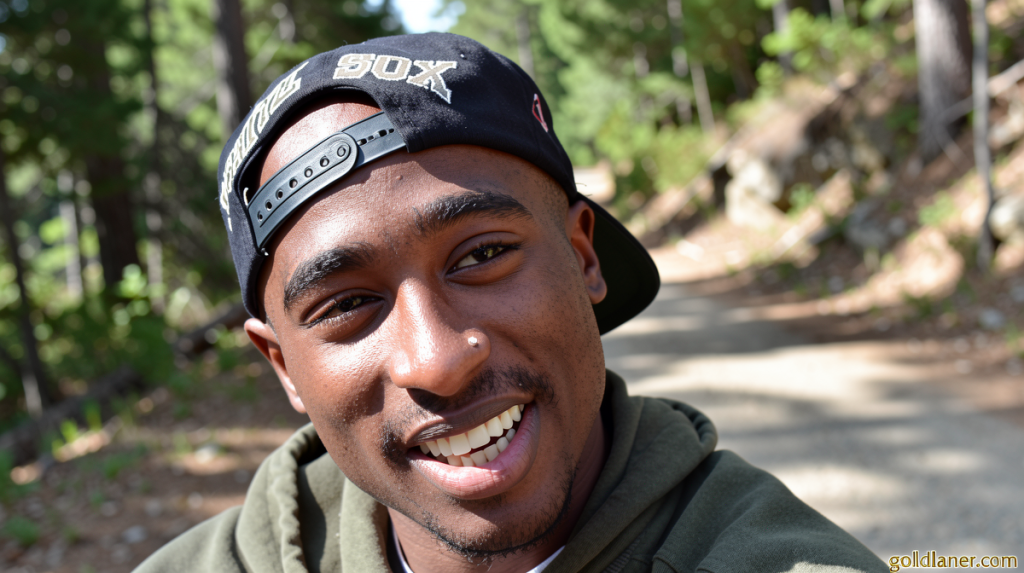
Three Decades Later, a Single Defendant Faces the Court for Tupac Shakur’s Death
Goldlaner.com – Nearly three decades after the drive-by shooting that ended the life of one of hip-hop’s most iconic figures, a courtroom in Las Vegas is preparing to hear the case of the sole individual ever formally charged in the killing. Duane Keith Davis, widely recognized by his street name “Keffe D,” stands accused of planning and arming the September 7, 1996 ambush that killed 25-year-old Tupac Shakur outside the MGM Grand casino. Prosecutors maintain that Davis did not pull the trigger himself but instead orchestrated the operation and provided the firearm used in the attack. He has entered a not-guilty plea on a single count of first-degree murder with a deadly weapon, charged with the intent to promote, further, or assist a criminal gang.
The trial arrives amid a cultural landscape still saturated with Shakur’s influence. His catalog spans eleven platinum-certified albums, seven of which were issued after his death. Titles such as All Eyez on Me and Me Against the World remain touchstones of 1990s hip-hop, while his film work in Poetic Justice and Above the Rim cemented his presence beyond the recording studio. Critics and fans alike have long described him as a “street poet,” a label earned through lyrics that dissected social injustice, urban survival, and the daily realities of being a Black man in America.
Roots in Harlem, Home in Oakland
Shakur entered the world in 1971 in Harlem, Manhattan, but his childhood was marked by constant relocation. He ultimately identified with Oakland, California, as his spiritual home base. In a 1993 interview he made that allegiance explicit:
“I give all my love to Oakland, if I’ma claim somewhere I’ma claim Oakland, even if I don’t live there.”
His mother, Afeni Shakur Davis, shaped his worldview from an early age. A former member of the Black Panther Party in her youth, she carried activist commitments throughout her life and passed a sense of political urgency to her son. That inheritance is audible in the socially charged material that defined his discography.
The West Coast–East Coast Divide
During the mid-1990s, Shakur stood at the apex of West Coast rap while a fierce public rivalry pitted him against East Coast star Christopher Wallace, known as “The Notorious B.I.G.” or “Biggie Smalls.” The debate over whether Shakur was genuinely embedded in gang life intensified because of his lyrical content and his association with Marion “Suge” Knight, the powerful head of Death Row Records. Shakur himself pushed back against the label:
“I am not a gangster and never have been.”
He told the Los Angeles Times in 1995 that his songs simply mirrored the harsh textures of street existence, which included “lots of killing and drugs.” Yet the legal system told a different story in his final years: he was convicted of sexual abuse and spent eight months behind bars. At the moment of his death he was out on bail while appealing that conviction.
The cultural footprint has not faded. In 2012, sixteen years after his murder, the Coachella festival projected a holographic Shakur onto its main stage, drawing gasps from an audience that treated the apparition as both tribute and spectacle.
Who Is Duane Keith Davis?
Davis was 33 years old on the night of the shooting. Much of the public’s understanding of his background derives from his 2019 memoir, Compton Street Legend, co-written with Yusuf Jah, who is listed among the potential witnesses for the upcoming trial. The book chronicles Davis’s years as a member of the South Side Compton Crips, mapping the friendships, rivalries, and obligations that converged on the evening Shakur was killed.
Law enforcement has long pointed to the violent rivalry between two Los Angeles-based street organizations — the Bloods and the Crips — as a contributing factor in the chain of events leading to the shooting. Some individuals connected to the case have disputed that framing, arguing it oversimplifies a web of personal grievances and business disputes.
The Combs Connection
In his memoir, Davis recounts a conversation with Sean “Diddy” Combs, then one of the most dominant figures in East Coast music, who operated his own label and represented artists including Biggie Smalls. According to Davis, Combs approached him asking for assistance with “a couple of problems I need to be handled,” a reference he says pointed to Knight and Shakur. Davis describes his response:
“I looked at him in his eyes, and without hesitation, I responded, ‘That’s not a problem. We can make that happen!'”
Davis does not specify a figure in that exchange but later characterizes the arrangement as “a million-dollar bounty.” Combs, who appears on the trial’s potential-witness list, dismissed any suggestion of his involvement as “nonsense” during a 2016 appearance on the syndicated radio program The Breakfast Club. He has never been charged in connection with the Shakur case. Despite Davis’s account of Combs seeking his help, the prosecution’s theory of the crime centers on the immediate trigger: a physical altercation between Shakur, his entourage, and Davis’s nephew that erupted after the group left the Tyson fight at the MGM Grand.
The trial will test whether that single night of violence can be traced back to a broader conspiracy, or whether it remains what it appeared to be at the time — a drive-by shooting born of a street-level dispute, wrapped in the mythology of two rival gangs and the untimely death of a cultural icon whose voice continues to shape how a generation understands its own history.
Related Reading
Frequently Asked Questions
What is The key players in Tupac Shakur?
The key players in Tupac Shakur is the main topic of this guide. The article explains the context, practical details, and next steps readers should understand.
Why does The key players in Tupac Shakur matter?
The key players in Tupac Shakur matters because readers are looking for a useful answer, not just a short summary. Good content should match search intent and help them decide what to do next.